Blog
Why Event Engagement Should Start Before Attendees Arrive


Many events treat pre-event communication as administration. Attendees receive registration confirmations, agenda updates, venue details, reminder emails, speaker announcements, and instructions about what to do when they arrive. All of that matters because a well-run event needs clear logistics.
But logistics are not the same as engagement.
Imagine Laura, an event manager preparing for a 650-person industry summit. The reminder emails are scheduled, the agenda is live, the sponsor logos are visible, and the venue instructions are clear. From an operational perspective, the event is on track.
But two days before the event, Laura notices something missing. Attendees know where to go, but they have little sense of who else is coming, which conversations are forming, what topics others care about, or how they should prepare to participate. First-time attendees may be arriving cold. Sponsors may be relying on booth traffic. Speakers may be walking into sessions without knowing what questions are already on attendees’ minds.
The event is organised, but engagement has not really started.
That is the risk when pre-event communication only focuses on logistics. If the only thing attendees receive before the event is information about where to go and what time to arrive, a major opportunity is being missed.
Event engagement should not start when someone walks through the door. By then, attendees have already formed expectations. They have already decided which sessions look relevant. They may already be wondering who they will meet, whether they will know anyone, how useful the day will be, and whether the event feels worth their time.
A stronger event experience starts before attendees arrive. It helps people show up with context, confidence, and a clearer sense of which conversations matter.
Pre-Event Communication Is Often Too Operational
Most event teams are good at sending practical information before an event. They tell attendees when registration opens, where to park, which speakers are on the programme, where to collect a badge, and how to access the event platform or materials.
That information is necessary, but it usually prepares people to attend, not to engage.
Attendance preparation answers practical questions: where do I go, what time does it start, which sessions are available, and what do I need to bring? Engagement preparation answers deeper questions: who else will be there, which conversations are relevant to me, what topics should I be thinking about, and how can I participate rather than simply observe?
When pre-event communication only focuses on logistics, attendees may arrive organised but not engaged. They know how to get through the event, but they may not know how to get value from it.
This is where many events miss the bigger opportunity. The pre-event window is not only a time to confirm details. It is a chance to shape relevance, confidence, and connection before the room fills.
For a related perspective on this problem, see Great Events Don’t Start Cold.
Event Day Should Not Start From Zero
One of the biggest problems in event engagement is that organisers often expect connection to begin on the day itself. The event opens, people arrive, sessions begin, networking breaks are scheduled, sponsors are visible, speakers present, and attendees are expected to make the most of the opportunity.
But for many people, that is a lot to work out in real time. They are navigating the venue, deciding where to sit, checking the agenda, scanning the room, managing energy, and trying to work out who might be useful or relevant to speak with.
If the event has not created any engagement context before arrival, attendees are starting from zero. That makes participation harder than it needs to be.
A better approach is to build momentum before the event begins. That does not mean overwhelming attendees with more content. It means helping them understand the people, themes, opportunities, and conversations around the event early enough to arrive with intention.
When attendees arrive already thinking about who they might meet, what they want to discuss, and where they fit, event day becomes more valuable.
Relevance Should Be Visible Before Arrival
Attendees do not engage equally with everything. They engage with what feels relevant.
That relevance may be connected to their role, goals, interests, challenges, community, sector, career stage, or reason for attending. The problem is that many events leave relevance discovery until too late.
Attendees are expected to scan the agenda, browse the sponsor area, listen to speakers, and work out what matters once they are already inside the event experience. That creates friction. Some attendees will find their way naturally, but others will miss useful sessions, overlook relevant people, avoid conversations, or fail to see why certain sponsors, partners, or community groups matter to them.
Pre-event engagement helps solve this by making relevance easier to see earlier. For example, organisers can help attendees understand:
- which themes are shaping the event
- which sessions connect to their interests or challenges
- which speakers are opening important conversations
- which sponsor or partner topics may be relevant
- which peer groups, member groups, or communities are likely to be present
- what conversations they may want to join during the event
This makes engagement less random. It helps attendees arrive with a stronger sense of purpose.
It also makes the live event easier to navigate. When people have already seen the topics, communities, and opportunities that matter to them, they are less dependent on chance once the event begins.
A Lot of Event Friction Is Social, Not Logistical
People may know where the networking session is, but still feel unsure how to enter a conversation. They may know which speakers are presenting, but not who else is interested in the same topic. They may know sponsors will be present, but not which ones are worth speaking with.
That is why a smooth event can still feel socially unclear.
Pre-event engagement helps reduce that uncertainty by giving attendees useful signals before they arrive. These signals might include who they might meet, what conversations are likely to happen, where their interests connect to the programme, how they can participate, and what shared challenges or goals exist across the community.
This matters because many attendees are not only trying to find the right room. They are trying to find their place in the room.
That is especially true for first-time attendees, new members, quieter participants, and people attending without an established network. For more on that specific journey, see How Events Can Turn First-Time Attendees Into Active Community Participants.
The goal is not to make the event more complicated. It is to make participation feel easier, more relevant, and more natural before attendees are under the pressure of the live event environment.
Pre-Event Engagement Helps the Whole Event Ecosystem
Pre-event engagement is often discussed through the attendee experience, but its value is broader than that. Sponsors benefit when attendees understand why their presence is relevant before they walk past a stand or see a logo. Speakers benefit when their session themes are introduced early, giving attendees time to think, respond, and bring better questions into the room.
Partners benefit when their role is understood as part of the event experience, not just listed on the programme. Organisers benefit when people arrive more prepared to participate, rather than waiting for the event team to create energy from scratch on the day.
This is why pre-event engagement should not be treated as a marketing afterthought. It is part of how event value is created.
The stronger the context before the event, the easier it becomes for people to connect, participate, and continue conversations afterwards.
The Before, During, and After Experience Is Connected
Events are often planned around the live event window, but attendee engagement does not work that way. What happens before the event shapes how people behave during the event. What happens during the event shapes whether they continue engaging afterwards.
If there is no pre-event engagement, event day has to do too much work. It has to create context, relevance, connection, participation, and momentum all at once.
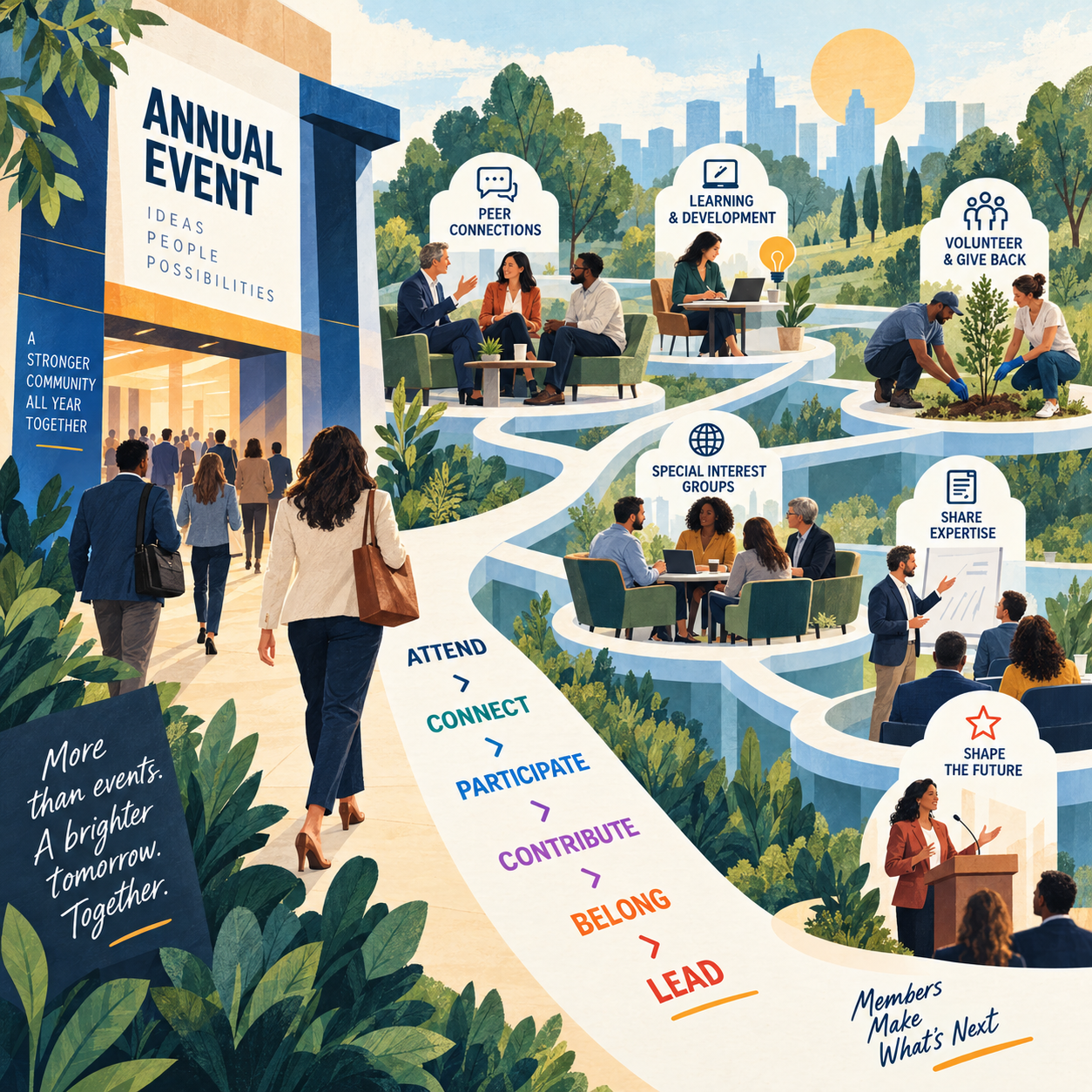
A stronger approach connects the full experience. Before the event, people are given context and reasons to participate. During the event, those signals become conversations, introductions, discussions, and shared moments. After the event, those conversations have somewhere to continue.
This creates a more natural engagement journey. The event is no longer a single moment where everything has to happen at once. It becomes part of a broader community experience.
For a related look at the role of guided participation during the live event, see Why Events Need Community Hosts, Not Just Agendas.
What Stronger Pre-Event Engagement Looks Like
Stronger pre-event engagement does not mean sending more emails, announcements, or noise. It means making the right signals visible earlier.
That might include:
- introducing key themes before the event
- helping attendees identify relevant sessions and conversations
- giving people prompts to think about who they want to meet
- making sponsor and partner relevance clearer
- surfacing speaker questions before the session
- helping members or attendees see who else is part of the community
- creating simple pathways for people to express interest, ask questions, or start conversations before arrival
The goal is not to overload people. The goal is to help them arrive more prepared to engage.
For example, instead of only sending a reminder that says “registration opens at 8:30 am”, an organiser could also ask attendees to choose one topic they want to discuss, one session they are most interested in, and one type of person they would like to meet. That small shift turns a logistical touchpoint into an engagement signal.
When attendees arrive with context, the event can start at a higher level of relevance.
What Organisers Should Capture
If event teams want engagement to start before attendees arrive, they need to measure more than registrations, email opens, and agenda downloads. Those numbers may be useful, but they do not show whether people are ready to participate.
A practical pre-event engagement model should show what attendees understood before arrival, how that signal was captured, and who can use it to improve the event experience.
| What to capture | How to capture it | Who it helps |
|---|---|---|
| Pre-event confidence | Short pulse questions such as “Do you feel clear on how to participate?” or “Do you know what you want to get from the event?” | Event teams identify uncertainty before attendees arrive |
| Topic interest | Registration prompts, agenda saves, poll responses, content clicks, or pre-event questions | Programme teams understand which themes are creating interest before the event |
| Connection intent | Prompts asking who attendees want to meet, what challenges they want to discuss, or which groups they are interested in | Event and community teams design better introductions and networking pathways |
| Discovery behaviour | Profile views, saved attendees, sponsor views, topic tags, or networking opt-ins | Organisers see whether attendees are finding relevant people and opportunities early |
| First-time attendee needs | First-timer opt-ins, newcomer questions, welcome-session interest, or feedback about attending alone | Membership and event teams create clearer entry points for new attendees |
| Sponsor relevance | Sponsor content views, topic-based opt-ins, meeting interest, or attendee questions linked to sponsor themes | Commercial teams understand whether sponsor value is being built before booth traffic |
| Speaker question signals | Pre-submitted questions, discussion prompts, content saves, or session-related comments | Speakers and programme teams shape more relevant sessions and follow-up |
| Pre-event friction | Repeated questions, low platform activation, unclear profile completion, or low networking opt-in | Operations teams see where communication or onboarding needs to be clearer |
This gives organisers a clearer view of whether the event is building engagement before the day itself. Instead of only measuring whether people received information, teams can see whether attendees are gaining context, signalling interest, discovering relevant people, and preparing to participate.
How to Use Pre-Event Signals to Improve the Event
Collecting pre-event signals is only useful if they lead to better decisions. The aim is not to add another layer of reporting. It is to understand what attendees need before they arrive and where the event experience can reduce friction earlier.
If pre-event confidence is low, the team may need clearer guidance, simpler first-timer messaging, or more visible participation pathways. If topic interest is concentrated around a few themes, organisers can use that signal to shape discussion prompts, room hosting, sponsor conversations, and post-session follow-up.
If discovery behaviour is low, attendees may not have enough reason to explore who else is attending or what conversations are available. That may point to unclear profile prompts, weak networking setup, or a lack of relevance before the event. If sponsor relevance is low before arrival, the issue may not be sponsor quality. It may be that sponsor involvement has not been connected clearly enough to attendee needs or event themes.
These signals help the team avoid starting cold on event day. They also reduce the need for staff, volunteers, or confident attendees to carry the whole participation layer manually once people arrive.
This is where pre-event engagement becomes more than communication. It becomes a practical way to create context, confidence, and better connection before the event begins.
Final Thought
Event engagement should not begin when attendees arrive. By then, too much has already been left to chance.
If organisers want stronger participation, better conversations, clearer sponsor value, and more community momentum, they need to start earlier. Pre-event engagement helps attendees arrive with context, confidence, and a clearer sense of where they fit.
It helps speakers start better conversations, sponsors become more meaningfully connected to the event experience, and the wider community build momentum before the room fills.
A strong event does not wait until event day to create engagement. It starts before attendees arrive.
Looking to Build Stronger Engagement Before Event Day?
SixSides helps event organisers create stronger pre-event engagement so attendees arrive with more context, clearer relevance, and a better sense of how to participate, not just where to go.
For teams trying to build momentum before the event begins, SixSides provides a practical way to support participation, connection, sponsor relevance, and community continuity before, during, and after the event.
Use the Book a demo option on this page to see how this could work in practice.
Give your event a community that lasts
A branded app where members show up before day one and stay long after the close. We'll walk you through it.