Blog
How Events Can Turn First-Time Attendees Into Active Community Participants
First-time attendees are often treated like every other attendee. They receive the same agenda, the same event reminders, the same registration process, and the same welcome message. From an operational point of view, that makes sense because everyone needs the basic information required to attend.
But first-time attendees are not experiencing the event in the same way as returning attendees.
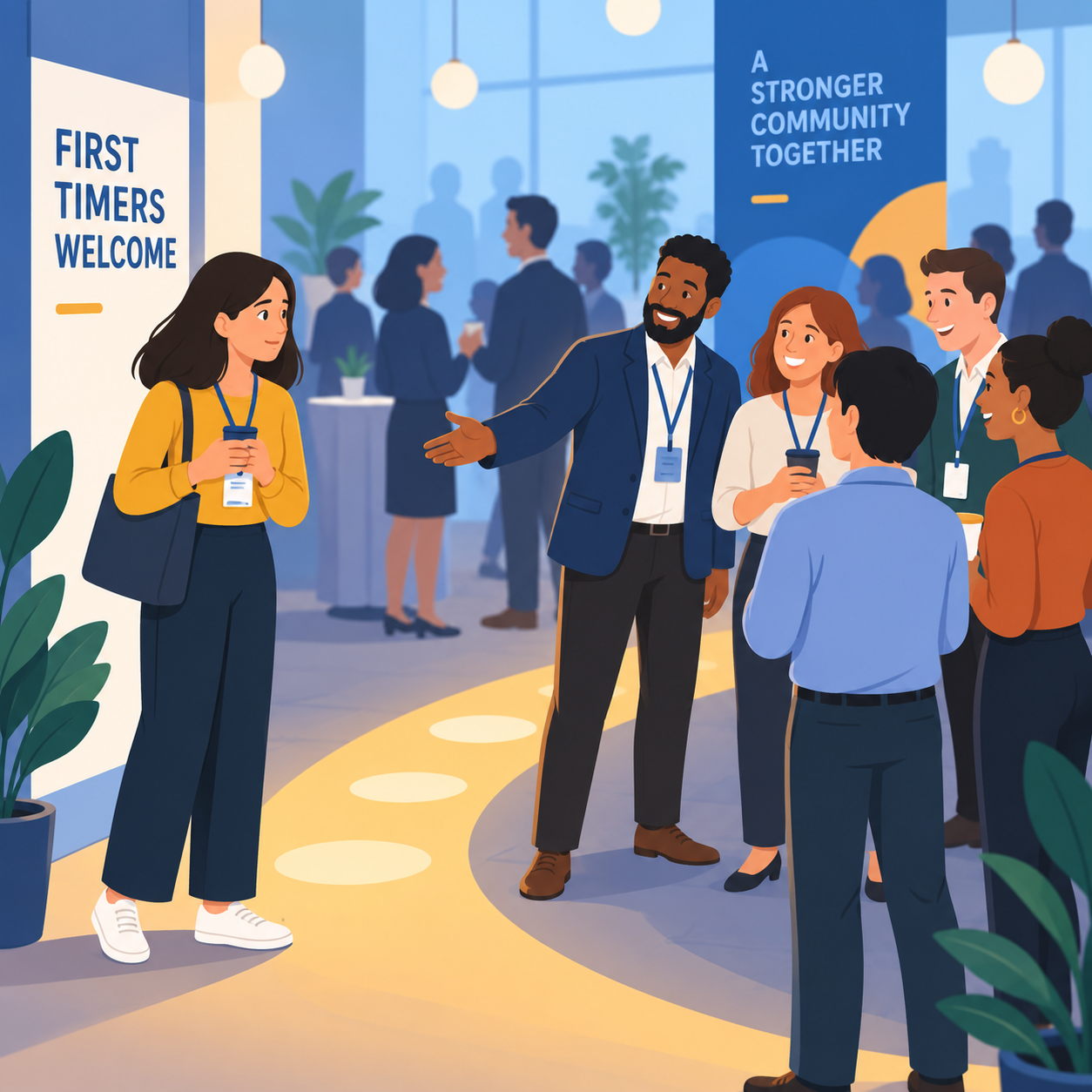
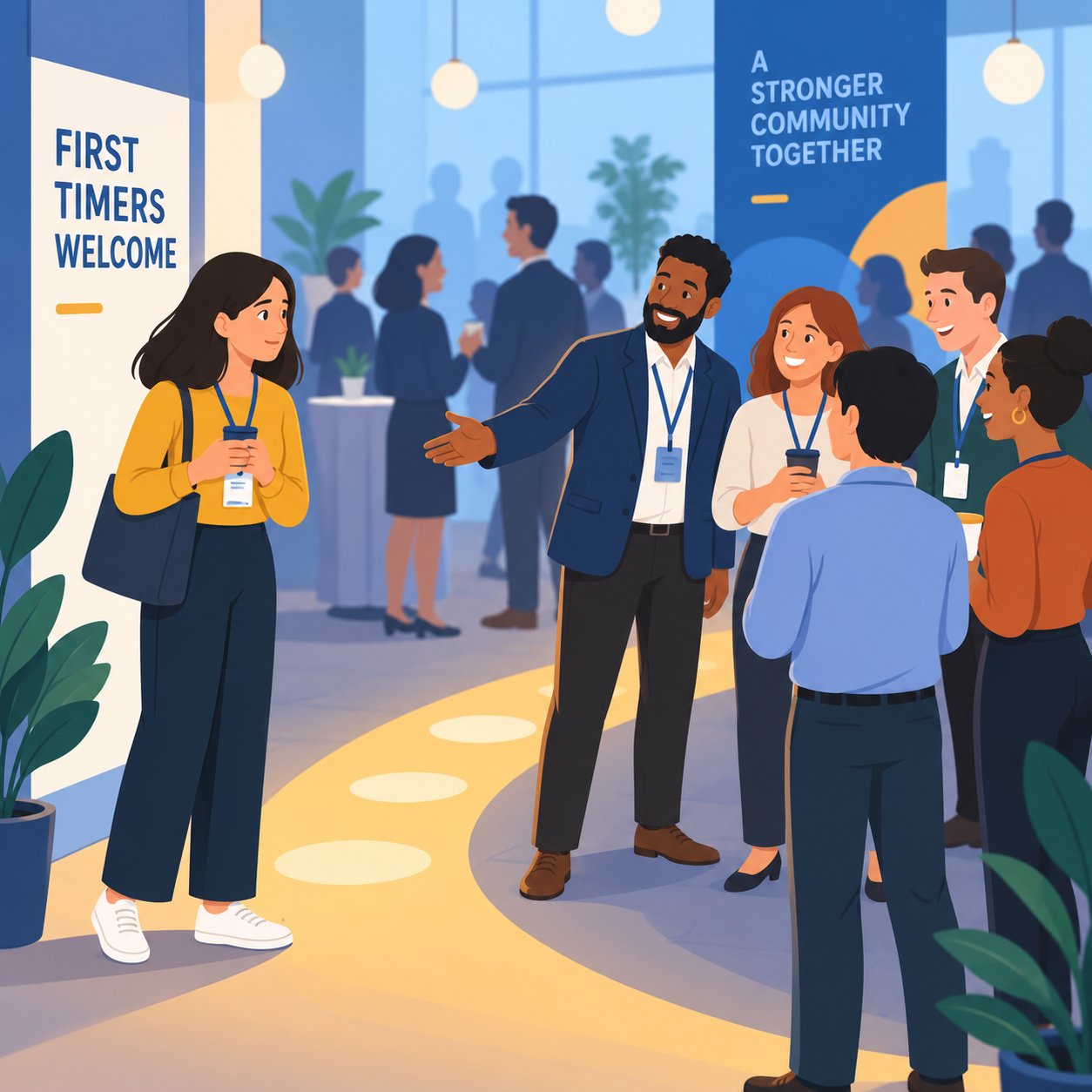
Imagine Priya, a new member attending a 400-person association conference for the first time. She arrives on time, collects her badge, checks the agenda, and sits through the opening session. The event is well organised, the content is useful, and the room is full of people who seem friendly enough.
Then the first networking break begins. Groups form quickly, familiar faces reconnect, and conversations seem to have their own rhythm. Priya walks around for a few minutes, checks her phone, grabs a coffee, and eventually returns to the next session without speaking to anyone meaningful.
From the event report, Priya attended. From the community perspective, she never really entered.
That is why first-time attendee experience should not be left to chance. If organisers want new attendees to return, engage, and become part of the wider community, they need more than event logistics. They need community onboarding.
Community onboarding means helping first-time attendees understand not just the event plan, but how to enter the people, conversations, and participation opportunities that make the event valuable.
First Attendance Is a Critical Community Moment
The first event experience often shapes how someone sees the organisation, conference, or community behind it. If the event feels welcoming, relevant, and easy to enter, first-time attendees are more likely to engage further. They may return next year, join discussions, connect with peers, recommend the event, or take a more active role in the community.
But if the experience feels socially unclear, they may leave without forming any meaningful connection. The event may still be well organised, the content may still be useful, and the feedback may even be positive. But if the attendee leaves feeling like they were outside the real community, the longer-term opportunity is weakened.
That is why first attendance should be treated as more than a registration category. It is a key moment of community entry.
Start With the First-Time Attendee Journey
A common mistake is to design the event around the agenda first and the attendee journey second. The agenda matters, but it does not explain what a first-time attendee is actually trying to navigate.
They are asking practical questions, but also social ones:
- Where should I go?
- Who should I meet?
- Will I know anyone?
- How do I join a conversation?
- Which sessions are most relevant to me?
- What happens after the event?
- Is this a community I can see myself being part of?
These questions influence whether someone participates or stays on the edge of the experience. A stronger approach is to map the first-time attendee journey before, during, and after the event.
That means looking at where uncertainty appears, where connection feels difficult, and where simple support could make participation easier.
Before the Event: Reduce Uncertainty
Community onboarding should begin before the attendee arrives. By the time someone reaches the venue or logs into the event platform, they have already formed an impression of whether the event feels clear, relevant, and welcoming.
Before the event, organisers can help first-time attendees by giving them more than logistical instructions. They can give them context.
That might include:
- a clear explanation of who the event is for
- key themes and conversations to expect
- suggested sessions for first-time attendees
- simple prompts to help attendees think about who they want to meet
- reassurance for people attending alone
- a clear explanation of how to participate, not just where to go
For example, instead of only sending a reminder email with venue details, an organiser could send a short first-timer note:
“Coming for the first time? A good way to approach the day is to choose one session linked to your current challenge, one person or group you would like to meet, and one conversation you would like to continue afterwards.”
That kind of message is simple, but it changes the frame. It helps the attendee arrive with intention rather than walking into the room cold.
For a related perspective on why engagement should start before the event day, see Great Events Don’t Start Cold.
During the Event: Create Clear Entry Points
Once the event begins, first-time attendees need simple ways to move from observation to involvement. This is where many events fall short.
They may provide networking time, exhibition areas, breakout sessions, and social moments, but still leave attendees to work out the social layer by themselves. For confident or well-connected attendees, that may be fine. For first-time attendees, it can create friction.
A better approach is to create clear entry points into the event community. That might include:
- first-timer welcome moments
- hosted introductions
- newcomer-friendly discussion prompts
- topic-led meetups
- peer matching
- table prompts for people attending alone
- visible pathways into member or community groups
The purpose is not to force people into artificial networking. It is to make the first step easier.
A first-time attendee should not have to work out the community from the outside. The event should help them find a way in.
Community hosts can play an important role here by creating small bridges between people, sessions, and conversations. For more on that idea, see Why Events Need Community Hosts, Not Just Agendas.
Connect People Around Relevance, Not Just Availability
One reason first-time attendees struggle is that networking is often too broad. They are told to meet people, but not always helped to understand who is relevant.
That can make connection feel random, especially for people arriving alone or entering an established community for the first time. A stronger first-time attendee experience helps people connect around relevance.
This may mean shared roles, common challenges, similar interests, aligned goals, related sessions, industry focus areas, or community themes. When attendees can see why a conversation might matter, they are more likely to start it.
This is especially important for associations and membership organisations. Their events often bring together people from different career stages, regions, and areas of expertise. Without support, first-time attendees may miss the people who would make the event most valuable to them.
With better community onboarding, connection becomes less dependent on confidence and more supported by design.
This connects closely with a broader event challenge: many attendees leave without making the connections they hoped for. For a deeper look at that problem, read Why Attendees Leave Events Without Making the Right Connections.
Use Returning Members as Bridges, Not Closed Circles
Returning attendees and long-term members can be one of the strongest assets in a first-time attendee experience. They understand the event, the organisation, and the community. They know the rhythm of the day and may already have relationships that can help new attendees feel more welcome.
But this only works if returning members are encouraged to act as bridges, not just reconnect with familiar groups.
That might mean inviting experienced members to welcome newcomers, join first-timer conversations, support table discussions, introduce people with shared interests, or explain how to get more involved after the event.
This does not need to be formal or heavy. Often, a small amount of intention is enough. The goal is to make the existing community more accessible to people entering it for the first time.
After the Event: Turn First Attendance Into Continued Participation
The first-time attendee journey does not end when the event closes. In many ways, the post-event period is where the real opportunity begins.
If a first-time attendee leaves with no follow-up, no relevant connection, and no clear next step, the event can quickly become a one-off experience. But if the event creates a pathway into continued participation, the relationship can deepen.
That might include:
- follow-up discussions
- topic-based groups
- introductions based on shared interests
- invitations to future events
- member pathways
- content connected to sessions they attended
- ways to reconnect with people they met during the event
The aim is to help first-time attendees see where they can go next. This is especially important for organisations that rely on recurring participation, membership growth, sponsor renewal, or long-term community engagement.
A first event should not feel like the end of the experience. It should feel like the start of a relationship.
For associations thinking about the space between major gatherings, Member Engagement Ideas Between Annual Events explores practical ways to keep members learning, networking, and contributing throughout the year.
A Simple Community Onboarding Checklist
Better community onboarding is not about overwhelming first-time attendees with more information. It is about helping them feel more prepared, more welcomed, and more able to participate.
A practical checklist might look like this:
- Before the event, give first-time attendees context, not just logistics.
- Help them understand who the event is for and where they may fit.
- Give them a simple way to identify relevant sessions, themes, or people.
- Make it easier for people attending alone to find an entry point.
- Create first-timer-friendly moments during the event.
- Encourage returning members to act as bridges.
- Capture what new attendees are interested in before or during the event.
- Give them a clear next step after the event.
- Follow up in a way that makes the event feel like the start of a community relationship.
These are small shifts, but they change the experience. They help first-time attendees move from passive attendance to active participation.
What Organisers Should Capture
If first-time attendee onboarding matters, organisers should measure more than whether new attendees showed up. The goal is to understand whether the event created a pathway into the community.
A practical measurement model should show what changed in the attendee experience, how that signal was captured, and who can use it to improve future engagement.
| What to capture | How to capture it | Who it helps |
|---|---|---|
| First-time attendee confidence | Pre-event pulse questions such as “Do you feel clear on how to participate?” or post-event feedback on ease of entry | Event teams identify uncertainty before and after the day |
| Relevant interests or goals | Registration prompts, topic selections, pre-event questions, session choices, or saved interests | Organisers create better introductions, sessions, and discussion moments |
| Entry-point activity | First-timer attendance at welcome moments, topic meetups, hosted introductions, or newcomer tables | Membership and event teams see whether new attendees found a way in |
| New connections made | Post-event survey questions, connection requests, meeting activity, community engagement, or opt-in follow-up prompts | Organisers understand whether first-time attendees connected with relevant people |
| Returning member support | Host notes, volunteer participation, bridge introductions, or first-timer feedback on welcome moments | Community teams understand whether existing members helped new people enter the experience |
| Return or follow-up intent | Questions such as “Would you attend again?” or “What would you like to stay involved in?” | Association and membership teams understand future engagement potential |
| Post-event participation | Follow-up discussion activity, event community engagement, related event registrations, or future event sign-ups | Community teams see whether first attendance turned into continued participation |
| Onboarding friction | Repeated questions, low welcome attendance, low networking uptake, or feedback about feeling unsure where to start | Event teams identify where the first-time attendee pathway needs to be clearer |
This gives organisers a more practical view of first-time attendee value. Instead of only reporting that new attendees registered and attended, they can show whether those attendees gained confidence, found relevant people, joined community moments, and had a reason to continue.
That is a stronger signal of long-term event value.
How to Use First-Time Attendee Signals to Improve the Next Event
Collecting first-time attendee data is only useful if it leads to better decisions. The aim is not to create more reporting for the sake of it. It is to understand where new attendees were supported and where they still had to work too hard.
If confidence is low before the event, organisers may need clearer pre-event guidance, simpler first-timer messaging, or better reassurance for people attending alone. If entry-point activity is low, the welcome moments may be hard to find, poorly timed, or not clearly positioned.
If new connections are weak, the issue may not be attendee interest. It may be that the event did not make relevance visible enough. The next event may need better topic tagging, hosted introductions, or clearer pathways from sessions into conversations.
If post-event participation drops quickly, the first-time attendee journey may need a stronger next step within the first week after the event. That could mean a smaller follow-up discussion, a personalised invitation, or a member pathway connected to the topics they engaged with.
This is where community onboarding becomes practical. It helps organisers see where first-time attendees are entering the community, where they are falling away, and what should be improved before the next event.
Final Thought
First-time attendees need more than access to an event. They need a way into the community.
They need context before they arrive, clear entry points during the event, and meaningful reasons to stay connected afterwards. When organisers design for that journey, first-time attendees are more likely to move from uncertainty to confidence, from observation to participation, and from one-time attendance to ongoing engagement.
That is the real opportunity.
A strong event does not just welcome first-time attendees into the venue. It helps them become part of the community.
Looking to Turn First-Time Attendees Into Active Community Participants?
SixSides helps event organisers reduce social friction and design stronger community onboarding before, during, and after the event.
For teams trying to help first-time attendees move from arrival to participation, SixSides provides a practical way to support clearer entry points, more relevant connections, and stronger post-event momentum.
Use the Book a demo option on this page to see how that could work in practice.
Give your event a community that lasts
A branded app where members show up before day one and stay long after the close. We'll walk you through it.