Blog
Why Events Need Community Hosts, Not Just Agendas
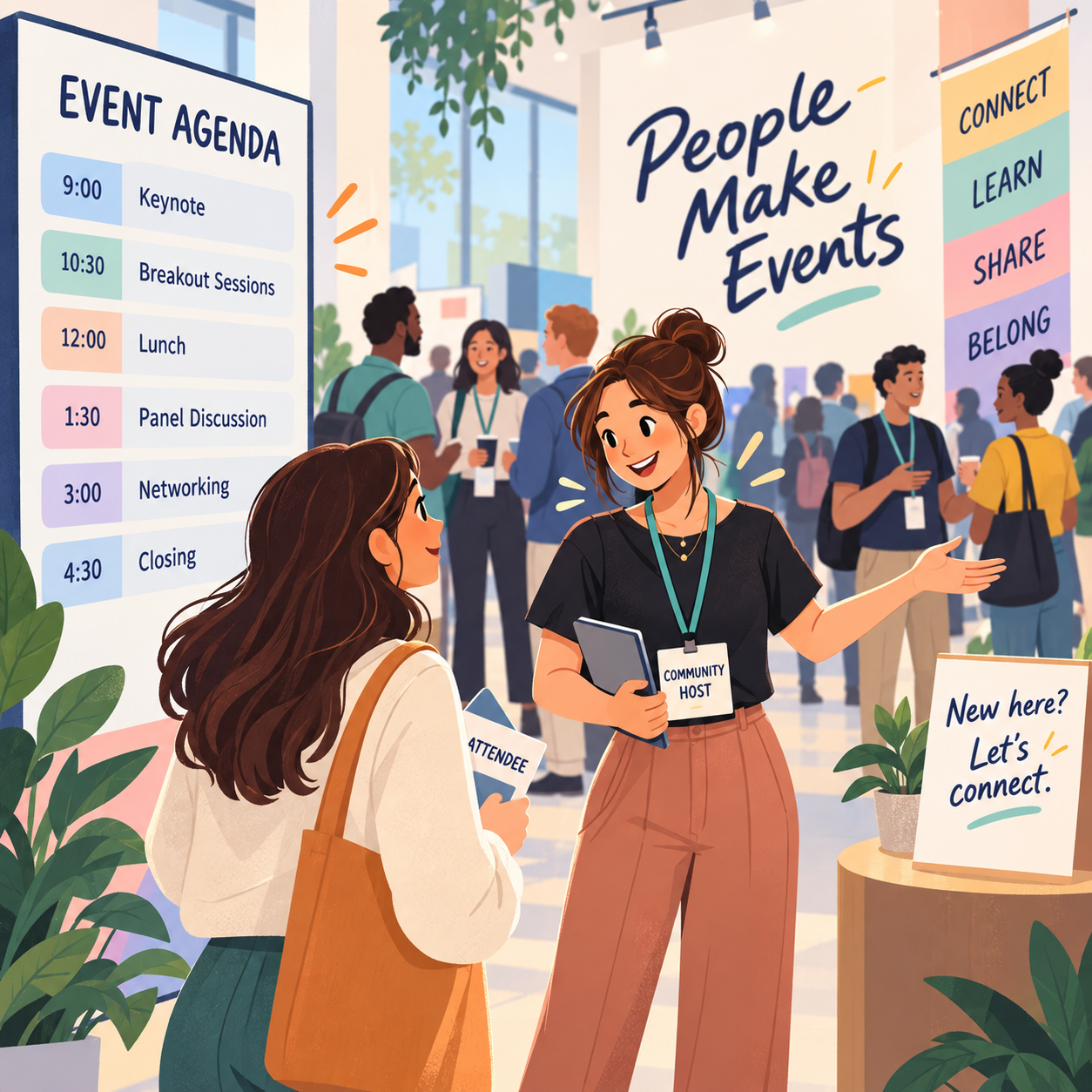
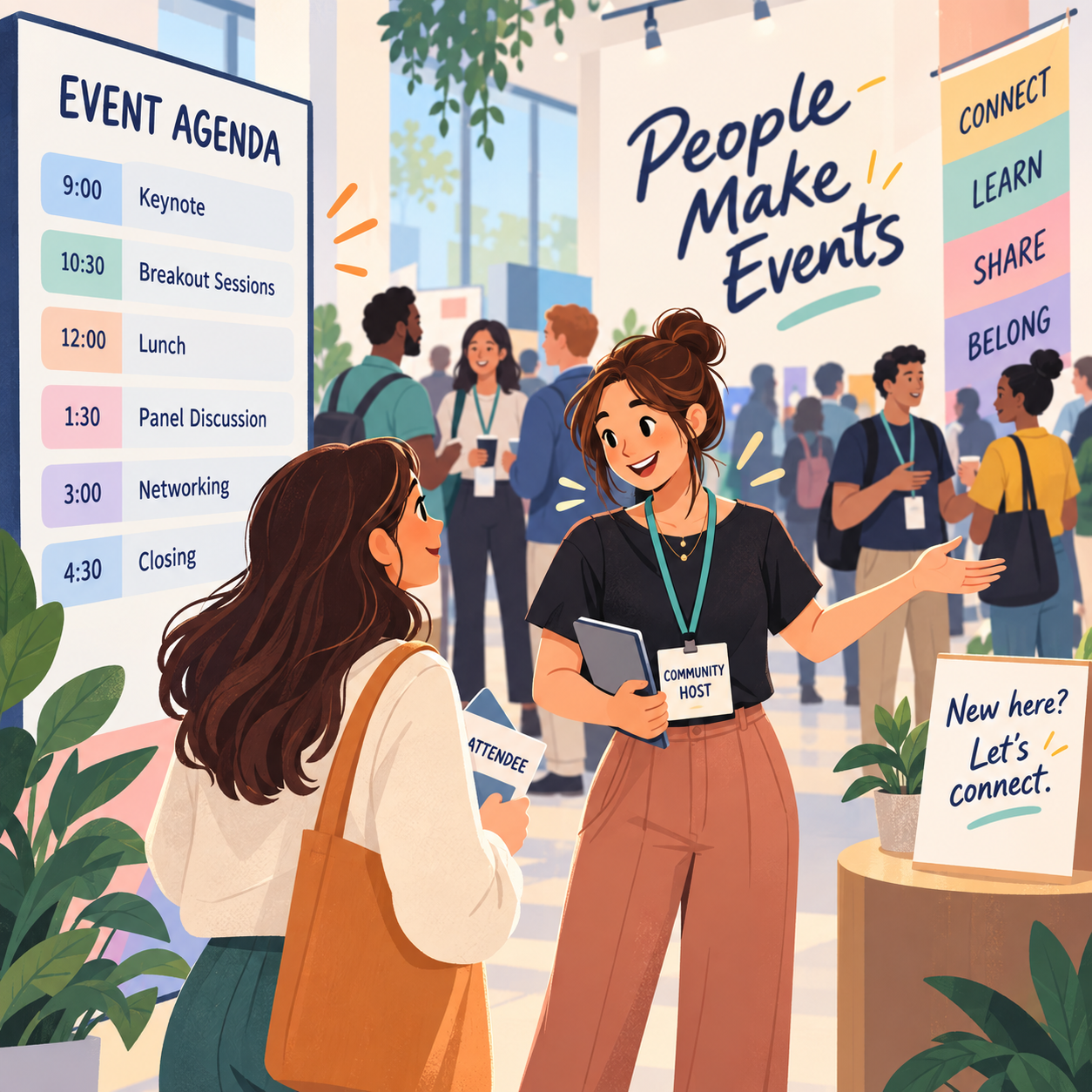
Most events are planned around an agenda. The agenda tells people what is happening, when sessions begin, where breaks fit, who is speaking, and how the day will move from one activity to the next. It gives structure to the event and helps attendees understand the programme.
That matters, but it does not automatically create participation.
Imagine Mia, a first-time delegate arriving at a 450-person industry forum. She has the agenda open on her phone. She knows the keynote starts at 9:00 am, which breakout session she wants to attend, where lunch is being served, and when the networking drinks begin.
The event is organised, but the social layer is still unclear. Mia does not know who to speak to, which conversations are already forming, whether she is meant to introduce herself, or which people are relevant to the reason she came. If she attends alone, that uncertainty can shape the whole experience.
The agenda tells her where to go. It does not tell her how to enter the community.
That is why events need community hosts, not just agendas.
The Agenda Organises the Day. It Does Not Host the Community.
Most event teams spend a lot of time designing the flow of the day. They plan sessions, speakers, catering, sponsor moments, breaks, room changes, signage, registration, and communications. All of that is necessary because without structure, the event quickly becomes confusing.
But once people arrive, another layer becomes just as important: the human layer. This is where attendees decide whether they feel welcome, whether they know how to participate, whether they can find relevant people, and whether the event feels like something they can be part of.
This is where many events rely too heavily on the agenda. A networking break appears on the programme, so the event assumes networking will happen. A sponsor area is available, so the event assumes sponsor engagement will happen. A Q&A is added after a session, so the event assumes discussion will happen.
But participation does not happen just because time has been allocated for it. Someone needs to help create the conditions for it.
In many events, that responsibility falls back onto staff, volunteers, or the most confident people in the room. That may work in small moments, but it is not a repeatable participation layer for helping more attendees find their way into the experience.
That is the role of community hosting.
What Is a Community Host?
A community host helps people enter the event experience more easily. They notice where connection may be difficult and create small bridges between people, topics, sessions, and conversations.
The role can look different depending on the event. It might be a member champion at an association conference, a facilitator inside a discussion space, a sponsor liaison who makes commercial conversations feel more relevant, or a community manager who helps conversations continue after the event.
It might also be a group of volunteers or ambassadors who know how to welcome people and connect them with others. The title matters less than the function.
Community hosts reduce friction. They make participation easier.
Why Events Without Hosts Can Feel Passive
An event can have strong content and still feel passive. People arrive, listen, move between sessions, collect information, have a few casual conversations, and leave. From an operational point of view, the event may look successful, but from a community point of view, something may be missing.
The issue is not always the quality of the agenda. It is that the event has not actively helped people move from attendance into participation. Many attendees may be interested, but uncertain. They may want to connect, but not know who is relevant. They may want to contribute, but not know where their voice fits.
Without hosting, the event often rewards people who are already confident, already connected, or already familiar with the community. Everyone else has to work harder.
This is one reason attendees can leave events without making the connections they hoped for. For more on that gap, see Why Attendees Leave Events Without Making the Right Connections.
Community hosting helps more people find their way in.
Community Hosts Reduce Social Friction
A lot of event friction is social, not logistical. People may know where to go and what time the next session starts, but still feel unsure about how to participate.
That uncertainty can show up in small ways. Someone attends alone and does not know where to sit. A first-time attendee joins a networking break but stays on the edge of the room. A member recognises familiar faces but does not meet anyone new. A speaker raises an important idea, but there is no clear pathway for discussion afterwards.
None of these problems are solved by the agenda alone. They need human support.
Community hosts can help by welcoming people, opening conversations, introducing shared topics, explaining how to participate, connecting people with similar interests, and helping the event feel easier to navigate socially. Good hosting does not need to feel forced. It simply helps participation feel more natural.
What Community Hosting Looks Like in Practice
Community hosting does not need to add heavy structure to the event. It usually works best through simple, intentional moments before, during, and after the main programme.
Before the event, a community host might help attendees understand what conversations are likely to matter, who the event is bringing together, and how they can prepare to participate. This could be as simple as highlighting topic groups, suggested introductions, first-timer guidance, or discussion prompts before attendees arrive.
During the event, hosts might welcome first-time attendees, help people find relevant discussion groups, introduce people around shared topics, or create a smoother bridge between sessions and conversations. After the event, they might help continue discussion, connect people who wanted to follow up, or guide attendees towards the next relevant community touchpoint.
For example, after a session on a shared sector challenge, a host could say:
“For anyone working through this issue in your own organisation, we are continuing the conversation near the back of the room during the break. Come over if you would like to compare what others are trying.”
That kind of prompt is simple, but it changes the event. It gives attendees permission to participate, tells them where the conversation is happening, and makes the next step clear. The host is not adding noise; they are making value easier to find.
Community Hosting Helps the Event Feel More Human
The best events do not feel like people are being processed through a schedule. They feel like people are being welcomed into a shared experience.
That is especially important for associations, membership organisations, conferences, and community-led events. These events are often designed to strengthen relationships, build trust, create shared learning, and support ongoing participation. A strong agenda helps deliver the programme, but a community host helps people feel part of it.
Without hosting, attendees may feel like observers. With hosting, they are more likely to feel invited to contribute, connect, and continue. This can also improve wider event value by helping ideas move into discussion, sponsor conversations feel more relevant, and communities stay active after the formal programme ends.
For association teams thinking about the space between major gatherings, Member Engagement Ideas Between Annual Events explores how ongoing touchpoints can keep members learning, networking, and contributing throughout the year.
Community hosting turns the event from a sequence of scheduled moments into a more connected experience.
A Simple Community Hosting Checklist
Community hosting does not require a large team. It requires clarity about where attendees may need help entering the experience.
Event teams can ask:
- Who is helping attendees feel welcome before the event begins?
- Who is guiding first-time or less confident attendees into the room?
- Who is making relevant conversations easier to find?
- Who is helping connect session themes to discussion opportunities?
- Who is helping sponsors, speakers, or partners engage in a way that feels useful?
- Who is noticing when people are present but not participating?
- Who is helping conversations continue after the event?
These questions help event teams identify whether participation is being actively supported or simply assumed. The goal is not to control every interaction. The goal is to make it easier for people to enter the community around the event.
What Organisers Should Capture
If community hosting matters, organisers should measure more than whether the agenda ran on time. They need to understand whether hosting helped people participate, connect, and continue.
A practical measurement model should show what changed in the attendee experience, how that signal was captured, and who can use it to improve the next event.
| What to capture | How to capture it | Who it helps |
|---|---|---|
| Attendee confidence | Pre-event or post-event questions such as “Did you feel clear on how to participate?” | Event teams identify whether people felt able to engage, not just attend |
| First-time attendee inclusion | First-timer check-ins, welcome moment attendance, newcomer feedback, or return intent | Organisers see whether new people found a way into the community |
| Relevant conversations | Post-event prompts asking whether attendees met someone useful to their goals or challenges | Event teams understand whether hosting created relationship value |
| Session-to-conversation flow | Discussion attendance, follow-up questions, topic group activity, or session-linked engagement | Speakers and organisers see whether ideas continued beyond the room |
| Sponsor or partner relevance | Feedback on whether sponsor or partner interactions felt useful, aligned, or natural | Commercial teams understand whether engagement went beyond visibility |
| Post-event continuation | Community activity, continued introductions, follow-up discussions, or future event interest | Leaders see whether the event created momentum after the day ended |
| Hosting friction | Host notes, repeated attendee questions, unclear pathways, or moments where people needed extra guidance | Event teams see where the experience needs clearer prompts, pathways, or support |
This gives organisers a clearer picture of how the event worked at a human level. Instead of only showing that sessions happened and people attended, they can see whether people found entry points, joined conversations, connected with relevant people, and had a reason to stay involved afterwards.
That is a stronger signal of event value.
How to Use Hosting Signals to Improve the Next Event
Collecting hosting feedback is only useful if it leads to better decisions. The aim is not to create a larger reporting pack. It is to understand where participation was supported and where attendees still had to work too hard.
If first-time attendees report low confidence, the next event may need clearer pre-event guidance, a welcome pathway, or visible hosts at arrival. If people attended sessions but did not join follow-up discussions, the event may need stronger bridges between content and conversation. If sponsors were visible but interactions felt weak, the team may need more intentional introductions around shared interests or attendee needs.
If hosts notice the same questions coming up repeatedly, that is a signal that the participation pathway is unclear. If post-event continuation is low, the issue may not be the quality of the event itself. It may be that attendees were not given a clear next step while their interest was still warm.
This is where community hosting becomes more than a nice human touch. It becomes a practical way to understand where the event experience is helping people participate and where it is still relying too much on chance.
Final Thought
A strong agenda helps people know what is happening, but it does not automatically help them participate. That is why events need community hosts.
Community hosts reduce social friction, welcome people into the experience, connect ideas to conversations, and help attendees find where they fit. For community-led events, this matters because the goal is not only to move people through a programme. The goal is to help people connect, contribute, and carry momentum beyond the day itself.
An agenda can organise an event. Community hosting helps bring it to life.
Looking to Create More Participatory Event Experiences?
SixSides helps event organisers create stronger attendee participation, better networking, clearer stakeholder value, and more valuable event communities before, during, and after the event.
For teams trying to move beyond well-run agendas and create more confident, connected event experiences, SixSides provides a practical way to support participation, connection, and community momentum without adding unnecessary complexity.
Use the Book a demo option on this page to see how that could work in practice.
Give your event a community that lasts
A branded app where members show up before day one and stay long after the close. We'll walk you through it.