Blog
The Hidden Engagement Signals Most Event Teams Miss
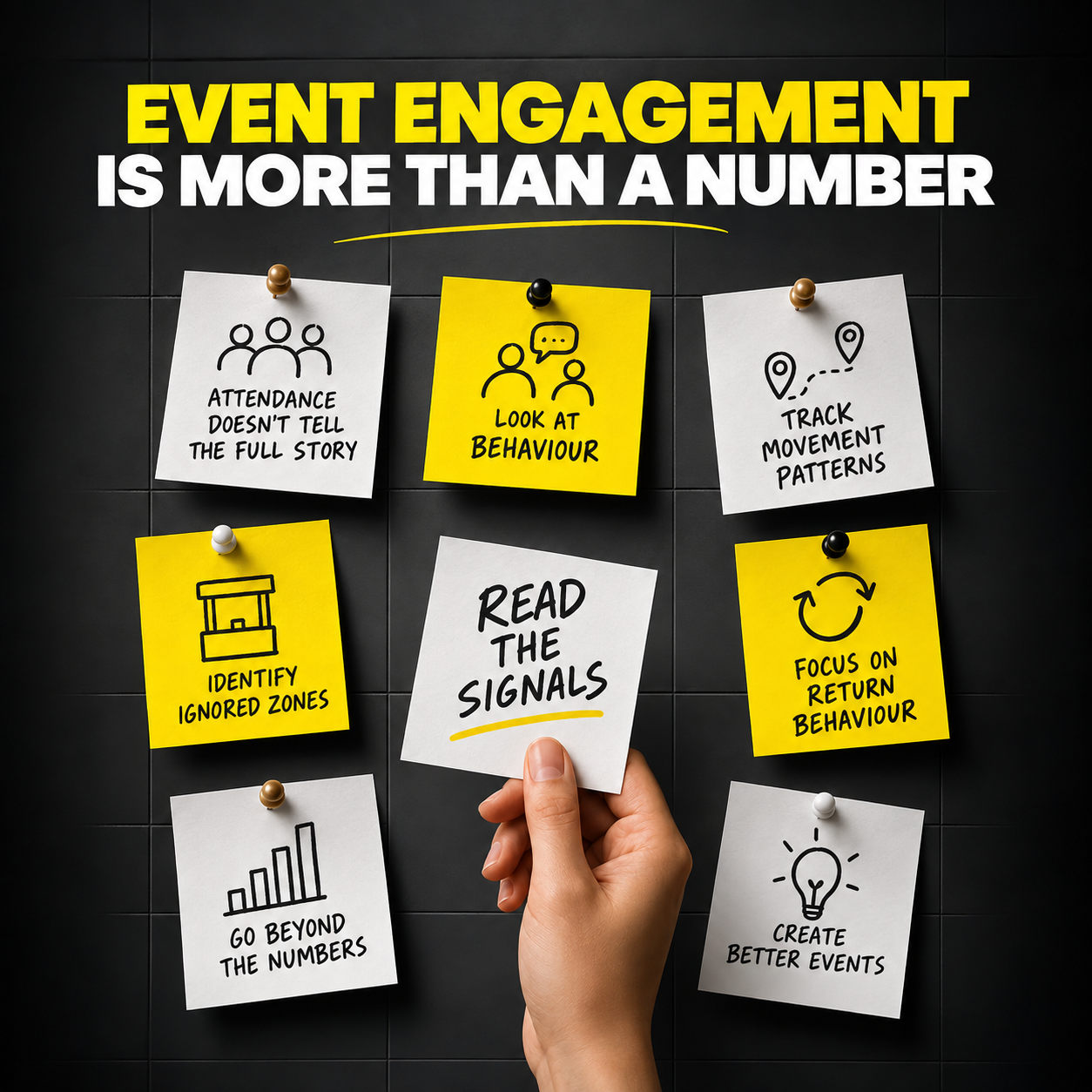
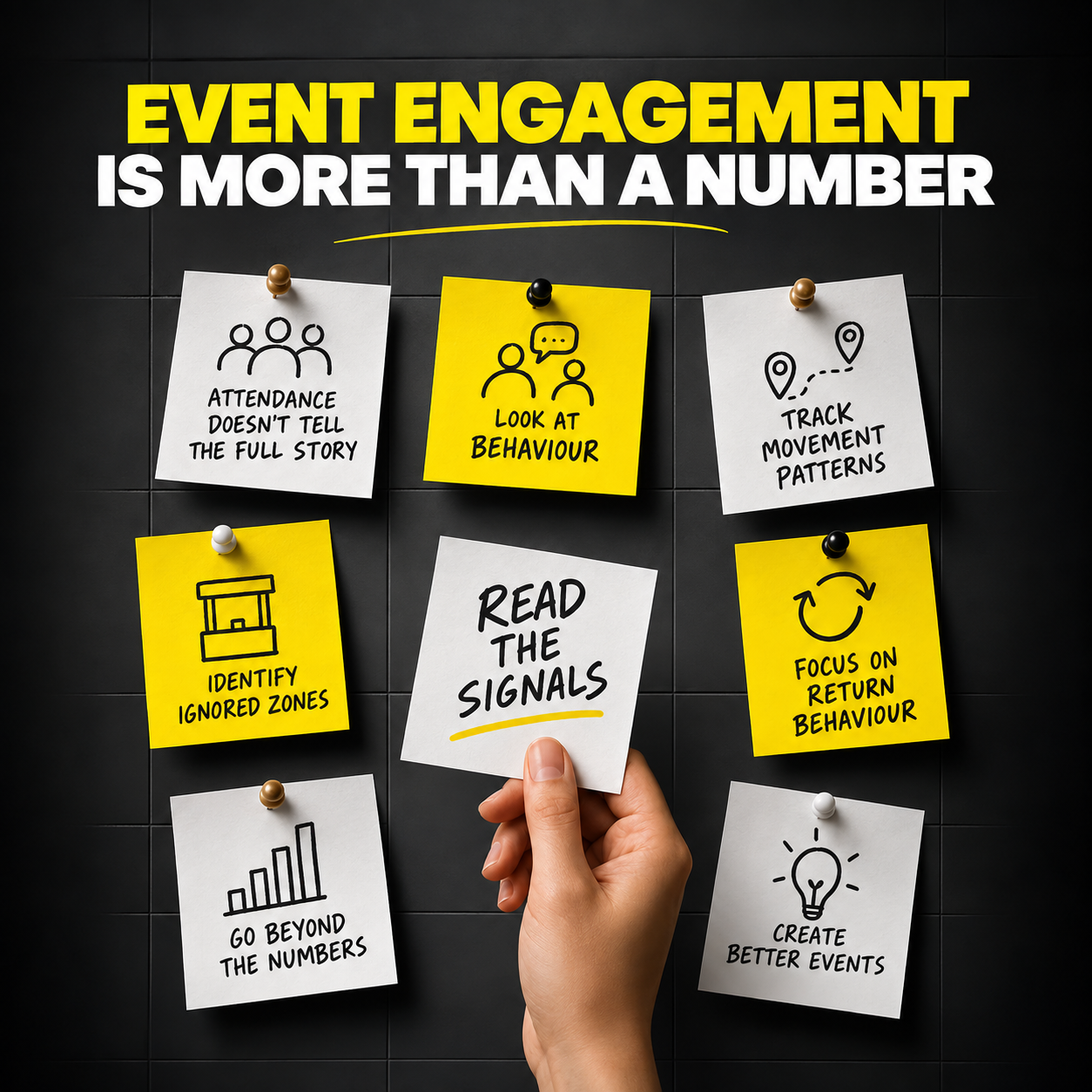
Event engagement is often misunderstood. Most organisers measure it through the most visible metrics — session attendance, app downloads, check-ins, clicks, the raw number of interactions taking place. Those numbers are easy to collect and easy to report, but they only describe activity. Real engagement goes deeper than surface-level counts. It lives in behaviour.
Engagement signals are the subtle patterns that reveal how attendees actually experience your event: where people spend their time, who they connect with, which sessions or sponsor areas they revisit, and what content they return to after the event ends. Just as importantly, engagement signals show up in what attendees avoid — the spaces they never enter, the features they never open, the moments that fail to create any participation at all.
Absence is data too
This is where many engagement strategies fall short. By focusing only on attendance figures and basic analytics, teams miss the chance to understand what is actually driving — or limiting — participation. An empty networking lounge, an underused app feature, a low-traffic sponsor booth or a session with no follow-up activity is not simply a failure to be quietly forgotten. It is a signal, pointing to friction, unclear value, poor event flow, weak attendee guidance or a missed opportunity for connection.
Take a concrete example. A sponsor booth in a prime position records low traffic all day. The attendance report says the event was full, so the organiser shrugs and the sponsor grumbles. But the movement data tells a sharper story: attendees streamed past that corner between sessions without stopping, because the schedule left them no slack to browse. That is not a bad sponsor or a bad audience — it is a scheduling problem, and it is fixable at the next event, but only if someone reads the signal.
Understanding these patterns is what separates teams that improve year on year from teams that repeat the same event with a new theme. It is how organisers, sponsors, exhibitors and communities get more value from every event.
4 ways to use engagement signals to improve your event
1. Look beyond attendance metrics
High attendance does not always mean strong engagement — a full room can be a passive one. Analyse dwell time, repeat visits, session interaction, networking activity and in-app behaviour to understand how attendees are really participating, not just whether they showed up.
2. Identify ignored zones
Low-traffic areas — physical spaces, sponsor booths, networking lounges or digital features — often hold your most valuable insights. They show where the experience was unclear, inconvenient, or simply not valuable enough to earn attention. Treat every ignored zone as a question worth answering before your next event.
3. Track movement and interaction patterns
Understanding how attendees move through your event helps you improve layout, scheduling, session timing, sponsor visibility and overall flow. Movement patterns reveal where people naturally gather, where they drop off, and where connection opportunities are being missed — the kind of detail no post-event survey will surface.
4. Focus on return behaviour
What people come back to is one of the strongest indicators of value. Repeat visits to a space, saved content, continued conversations and post-event activity all show which parts of the experience created lasting interest. Those are the elements worth expanding next time; everything else is a candidate for redesign.
From counting activity to reading it
Event success is not just about creating activity — it is about understanding what that activity means. When you treat engagement as a pattern rather than a number, you get a much clearer view of the attendee journey, the event's real performance, and the moments that genuinely drive participation.
At SixSides, we help event teams uncover and act on real engagement signals, so they can design smarter experiences, strengthen networking, and deliver better outcomes for organisers, sponsors and communities. If you want to move beyond surface-level metrics and build events people actually connect with, get in touch and we will show you how.
Give your event a community that lasts
A branded app where members show up before day one and stay long after the close. We'll walk you through it.