Blog
The Hidden Problem Behind Low Event Engagement
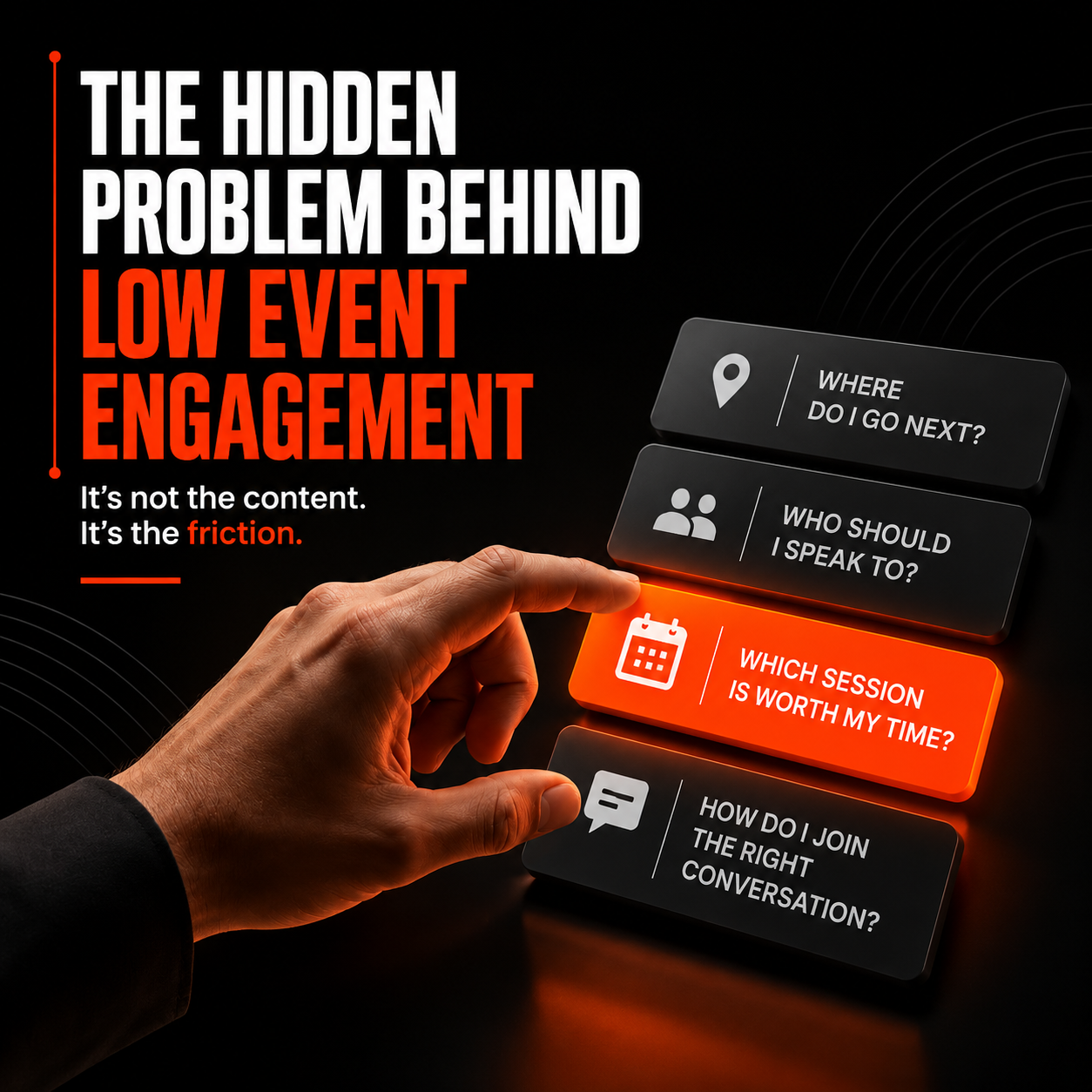
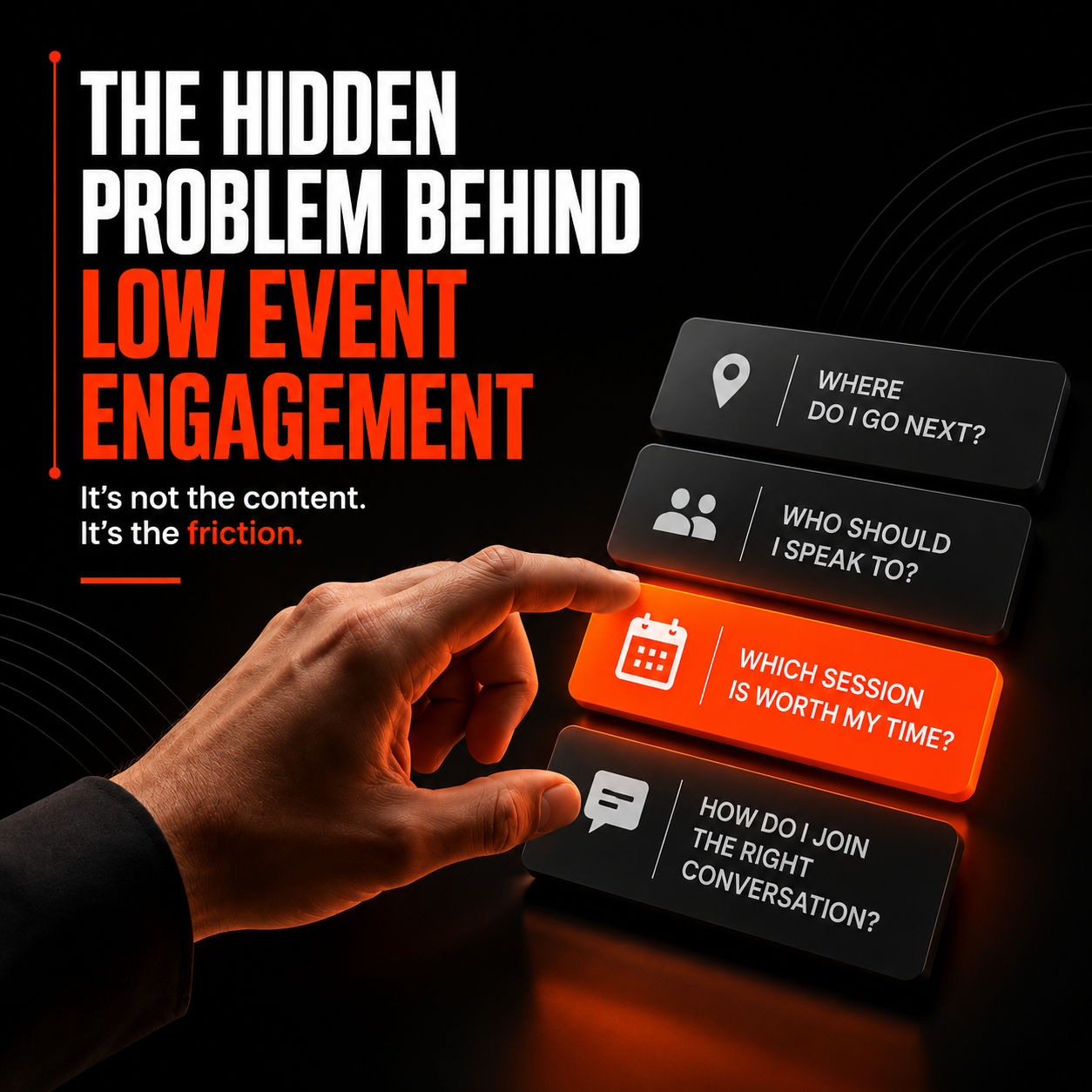
When engagement at an event falls flat, organisers usually look at the obvious suspects: the content, the speakers, the attendance numbers. But one of the most overlooked causes of low engagement is none of those things. It is friction — not the obvious kind, but the small, quiet moments where attendees have to stop and figure things out.
Every attendee hits these moments during an event:
- Where do I go next?
- Who should I speak to?
- Which session is actually worth my time?
- How do I join the right conversation?
Each question seems minor on its own. Together, they break momentum — and momentum is everything in a strong event experience. An attendee who is moving confidently from one useful moment to the next stays engaged. An attendee who keeps stalling to re-read the agenda or hover at the edge of a room slowly checks out.
How friction turns into disengagement
Low event engagement usually follows a predictable chain. When attendees feel uncertain, overwhelmed, or unsure how to participate, they hesitate. When they hesitate, they disengage — they retreat to their phone, sit in a familiar session, or leave early. And once disengagement sets in, the overall value of the event drops no matter how strong the content is.
Think about a mid-morning networking break. On paper it is a highlight of the day. In practice, an attendee walks in, sees clusters of people already deep in conversation, has no idea who is relevant to her, and cannot see an easy way in. Thirty seconds of that uncertainty is enough to send her back to her emails in the corner. The content around that break might be excellent; the friction inside it made the value inaccessible.
This is why the best B2B events do not just focus on delivering value — they focus on making that value easy to access. Strong event design guides attendees through the experience so they always know where to go, who to meet, what to prioritise, and how to take part. Engagement does not only come from what you provide. It comes from how easy you make it for people to participate.
4 practical tips to reduce friction at your events
1. Make navigation obvious
Attendees should never feel lost. Clear signage, intuitive layouts, simple event flows and easy-to-follow agendas let people move confidently between moments instead of burning attention on wayfinding. Every minute spent working out where to go is a minute of engagement lost.
2. Guide people to the right connections
Do not leave networking to chance. Help attendees understand who they should meet, why the connection matters, and how to start the conversation. A pointed introduction — "you should meet Sam, he is solving the same rollout problem you mentioned" — removes the hardest part of networking: the cold start.
3. Highlight what matters most
Not every session, person or activity carries the same value for every attendee. Surface the key sessions, relevant people, sponsor opportunities and high-value moments for each person so they can prioritise with confidence rather than guessing from a generic programme.
4. Remove decision fatigue
Too many choices are their own form of friction. An attendee facing six simultaneous options often defaults to the safest one — or none at all. Simplify the event journey and guide people towards a small number of meaningful actions instead of overwhelming them with everything at once.
Clarity is the real engagement strategy
Every moment of confusion is friction, and friction quietly kills engagement. The events that perform best are not just well-run; they are intentionally designed to feel clear, useful and easy to participate in for the people attending.
If you want to remove the friction that stops attendees from fully engaging — before, during and after your event — SixSides can help you design an experience where participation is the easy option. Get in touch and we will show you how.
Give your event a community that lasts
A branded app where members show up before day one and stay long after the close. We'll walk you through it.