Blog
Why Most Events Lose Momentum After They End (And How to Fix It)
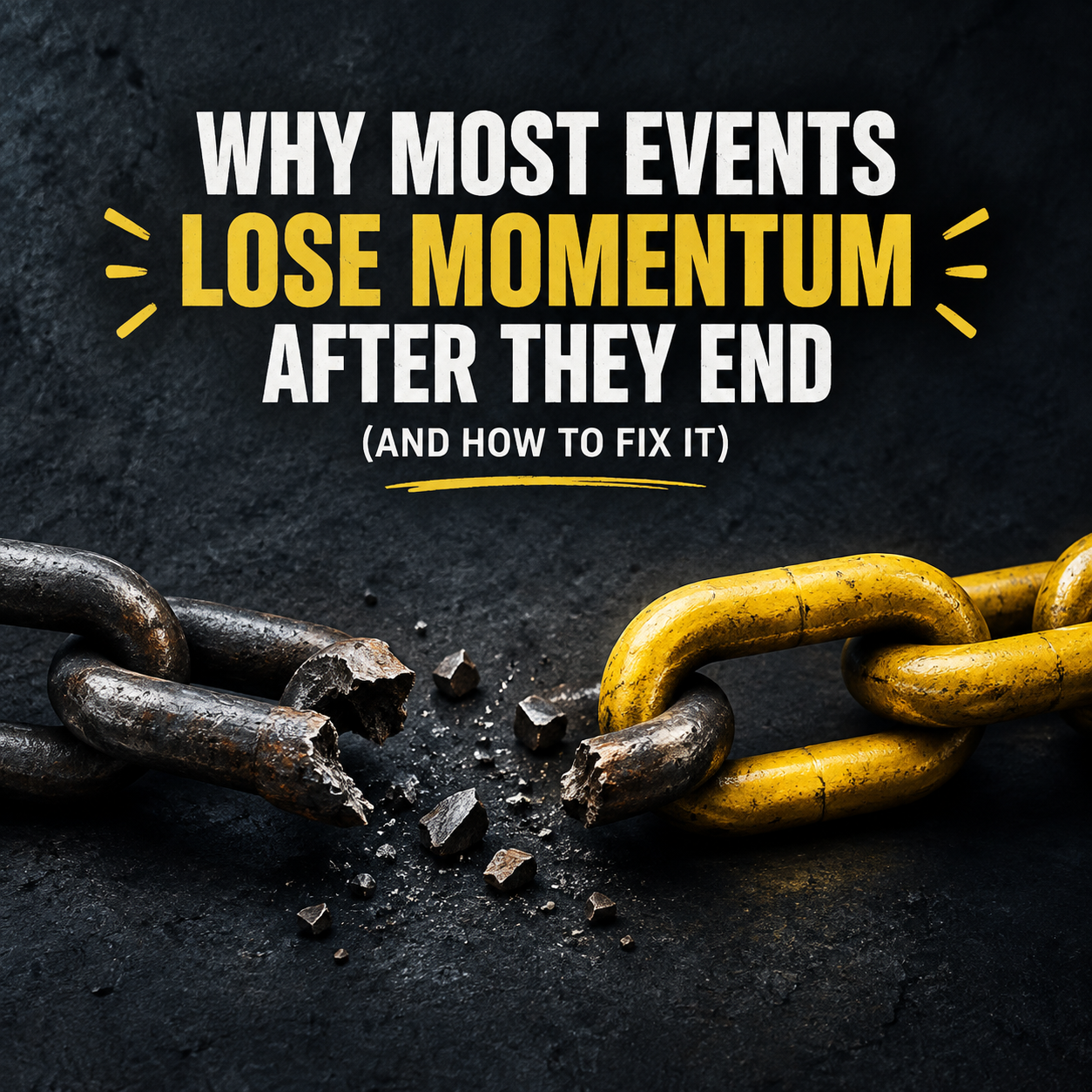
A lot of events are genuinely successful on the day. They attract the right people, spark strong conversations, and deliver a valuable attendee experience. Then the doors close — and one of the most common gaps in event strategy opens up: what happens next. Or, more accurately, what doesn't.
Too often, everything drops off the moment the event finishes. The energy fades, conversations stop, promising connections are never followed up, and the value created during the day stays trapped in a single day. Six weeks later, an attendee finds a stack of business cards in a jacket pocket and cannot remember which conversation went with which name. The moment has passed.
Why events lose momentum
Most events lose momentum for a simple reason: post-event engagement is treated as an afterthought rather than part of the event design. Budgets, planning time, and attention all point at the day itself. Follow-up, if it exists at all, is a thank-you email and a feedback survey.
For communities, associations, B2B events, and recurring programmes, this is an expensive gap. The real opportunity is not just delivering a great event — it is extending the value that event creates over time. The strongest events do not operate as standalone moments; they sit inside a broader lifecycle where relationships, conversations, and community engagement carry forward from one event to the next.
The shift happens when organisers stop asking "how do we run a great event?" and start asking "how do we sustain what the event creates?" Under that framing, the event becomes a starting point rather than an endpoint — the moment a community gains new members and new energy, not the moment everything peaks and dissolves.
Four practical tips to maintain momentum after an event
1. Design for what happens after
Most event planning stops at execution. It shouldn't. Before the event, decide how conversations will continue afterwards — through follow-ups, a community space, attendee messaging, or a structured post-event programme — and build those pieces into the plan alongside the venue and the agenda. Post-event momentum does not maintain itself; it has to be designed, and it is far easier to design in advance than to improvise once the energy has already faded.
2. Capture and activate connections
If valuable connections are made during the event, there should be a clear system to support them afterwards. That could mean facilitating introductions, enabling attendee-to-attendee messaging, prompting follow-ups, or helping people reconnect around shared interests. Without this, even strong connections fade fast — most follow-up intentions die within a week or two of the event unless something makes the next step easy.
3. Create ongoing touchpoints
Do not let the event be the only interaction attendees have with you or each other. Extend engagement between events through content, discussions, smaller meetups, digital communities, newsletters, or curated post-event conversations. A quarterly conference with a monthly discussion thread and an occasional small meetup feels like a community. The same conference with nothing in between feels like a transaction that resets to zero each year.
4. Shift from events to community thinking
This is the biggest shift of all. The most successful organisers do not just run events — they build engaged communities, and events become one part of a larger journey where participation, connection, and value compound over time. Each event starts warmer than the last, because attendees already know each other and the conversations pick up where they left off. Ask yourself honestly: are you delivering a moment, or building something that continues beyond it?
The event is the start, not the end
An event is powerful because of what happens in the room, but its real value is determined by what happens after. The best events do not end when people leave — they evolve into something that keeps creating value long after the day is over.
At SixSides, we help event teams turn one-day events into ongoing communities, with engagement designed for before, during, and after the day. If you want your next event to keep its momentum, get in touch and let us show you how.
Give your event a community that lasts
A branded app where members show up before day one and stay long after the close. We'll walk you through it.