Blog
Most Events Are Built for the Wrong Person
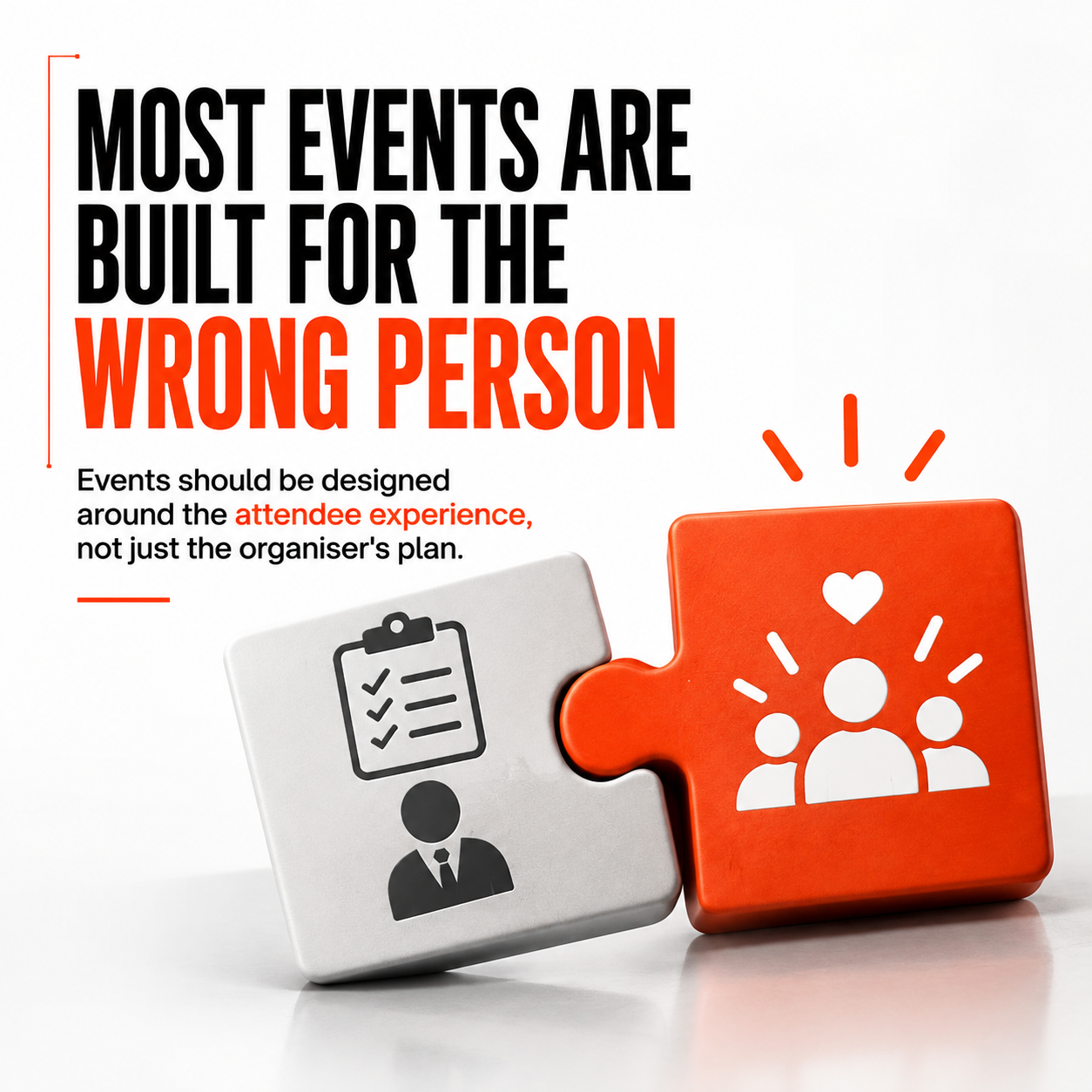
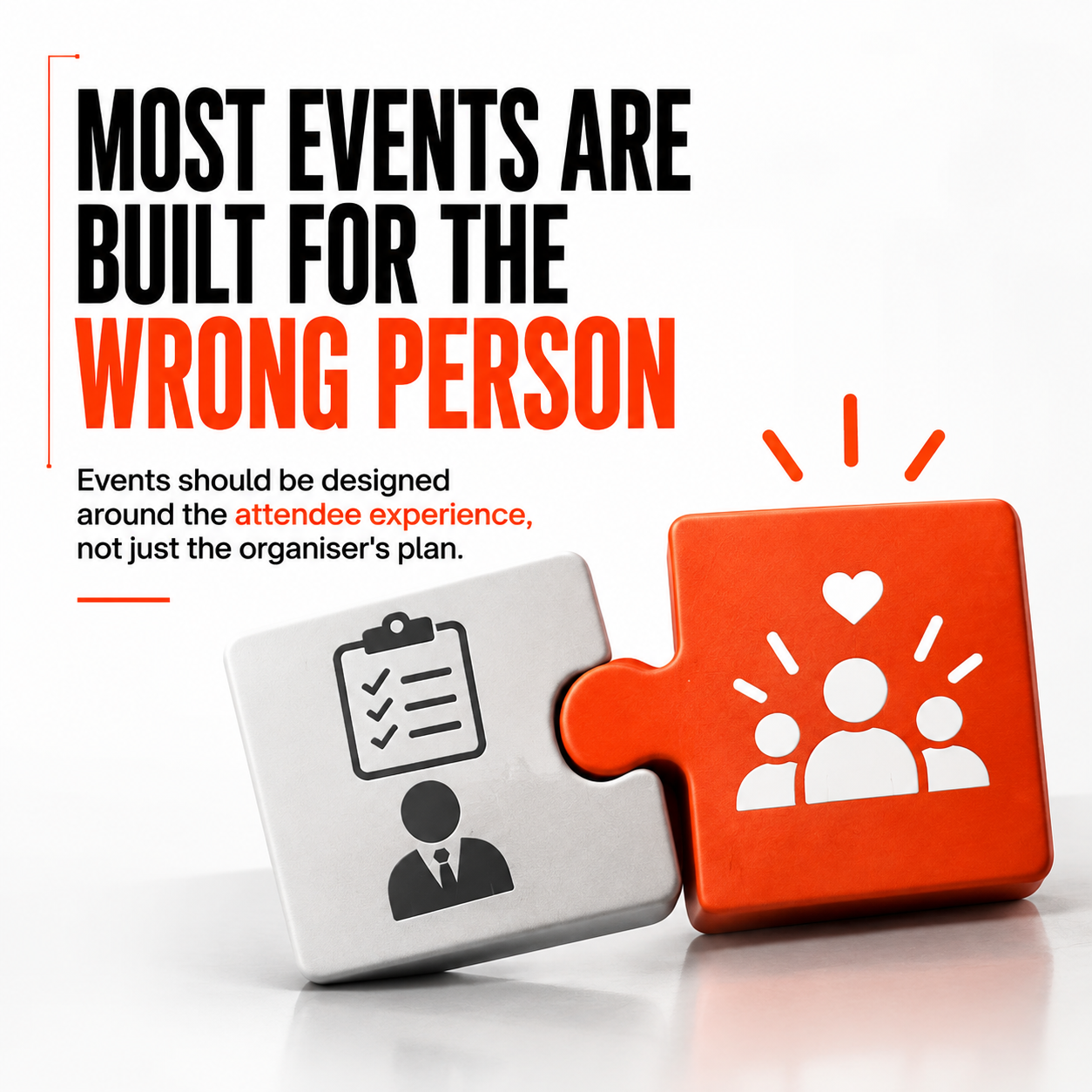
One of the most common issues in event planning is not obvious at first: who the event is actually built for. Many events are designed from the organiser's perspective, shaped around schedules, logistics, speaker flow, sponsor requirements and delivery. Those things matter — an event that runs late or over budget helps nobody — but they do not define the attendee experience.
Attendees do not experience your event through a run sheet. They experience it through moments: how easy it is to navigate, who they meet, what conversations happen, what feels relevant to them, and what value they take away. A perfectly executed schedule can still produce a flat, forgettable day if none of those moments land.
Where the disconnect shows up
When events are built mainly for organisers, everything looks organised on paper but participation tells a different story. Sessions start on time, yet the networking breaks feel aimless. The venue is well signposted for logistics, yet attendees still cannot work out which sessions or people are worth their limited time. People attend, but they do not connect, contribute, or remember the event in any meaningful way.
Picture a first-time attendee at a two-day industry conference. The agenda is polished, but nothing tells her which of the forty sessions suit her role, or which of the eight hundred attendees she should try to meet. She defaults to the keynotes, eats lunch with the colleague she arrived with, and leaves with a tote bag and no new relationships. The event ran flawlessly — for the organiser. For her, it barely happened.
What participant-first design looks like
The best events are built for participants. That means designing around connection rather than just coordination, clarity rather than just structure, value rather than just delivery, and engagement rather than just attendance.
A participant-first strategy puts the attendee journey at the centre. It examines how people move through the event, how they find relevant sessions, how they meet the right people, and how event technology can support meaningful interaction before, during and after the day itself. When the focus shifts to the attendee, everything improves together: navigation gets easier, interactions become more intentional, networking feels natural, sponsors see better engagement, and organisers get stronger outcomes to report.
4 practical tips to build events for participants
1. Start with the attendee journey
Map the experience from the attendee's perspective, stage by stage: what do they see, feel and do from registration through to the week after the event? Walking this journey honestly exposes the points of friction, confusion and missed engagement that a logistics-led plan never surfaces.
2. Design for connection, not just content
Great events are not only sessions and speakers. They are also the conversations, introductions and community moments that happen around the programme. Build in deliberate opportunities for attendees to meet the right people, rather than filling every minute with a packed agenda that leaves no room to connect.
3. Simplify the event experience
Make it easy for attendees to know where to go, what matters, and how to take part. Clear navigation, smart guidance and relevant recommendations reduce the mental load of the day, and a lighter mental load leaves more energy for actual participation.
4. Prioritise outcomes over activity
Do not measure success only by attendance numbers or completed sessions. Focus on what attendees leave with — new connections, useful insights, business opportunities, stronger relationships, and a reason to stay engaged after the event ends. Those are the outcomes people remember when deciding whether to come back next year.
Better events come from better thinking
The difference between a good event and a great one is not just how smoothly it runs. It is who it is built for. Logistics keep an event on schedule; participant-first design is what makes it worth attending.
If you want to design events that put participants at the centre — with a clearer attendee journey, stronger networking moments and better engagement before, during and after the event — SixSides can help. Get in touch and we will show you how.
Give your event a community that lasts
A branded app where members show up before day one and stay long after the close. We'll walk you through it.