Blog
Member Communication Between Association Events: How to Sustain Year-Round Engagement
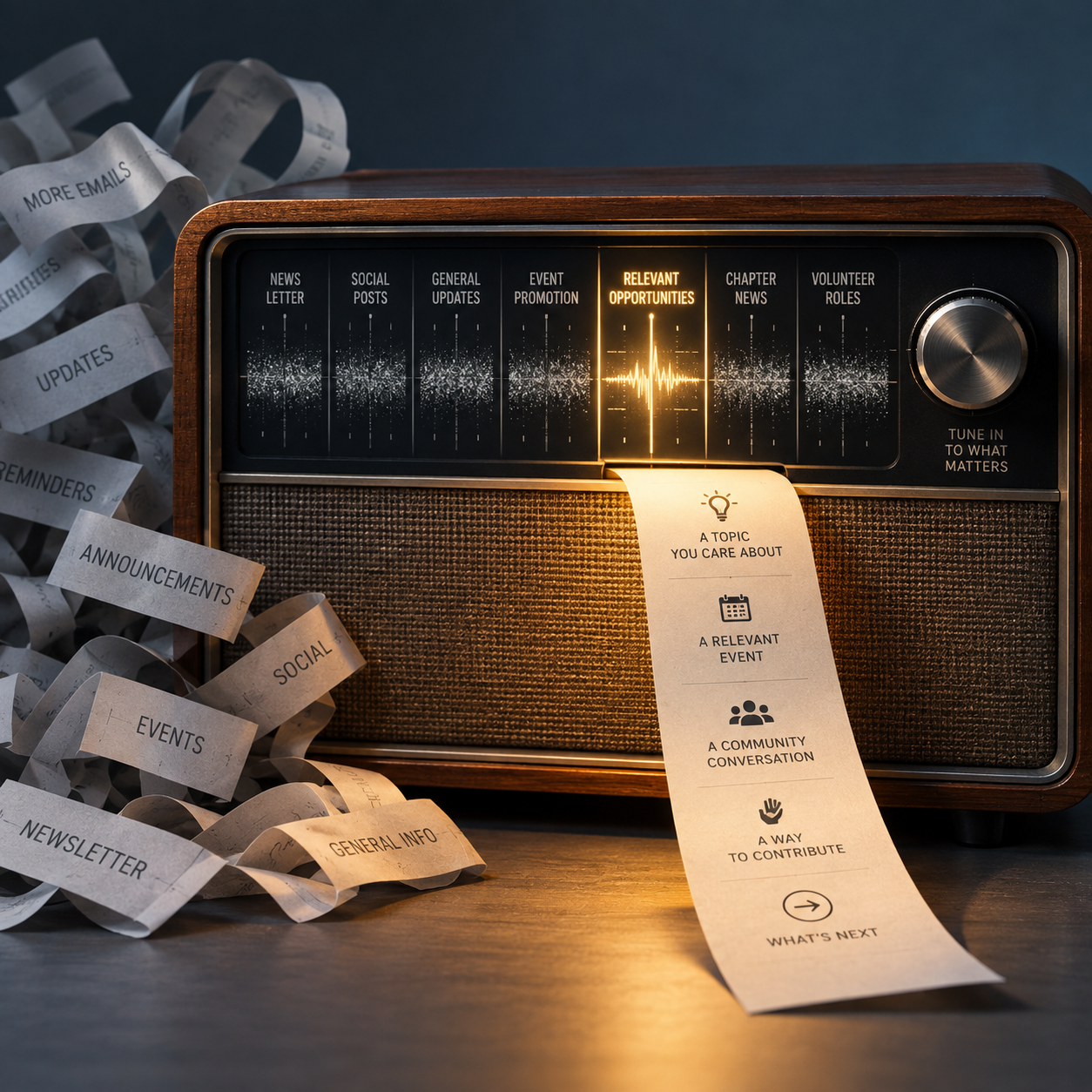
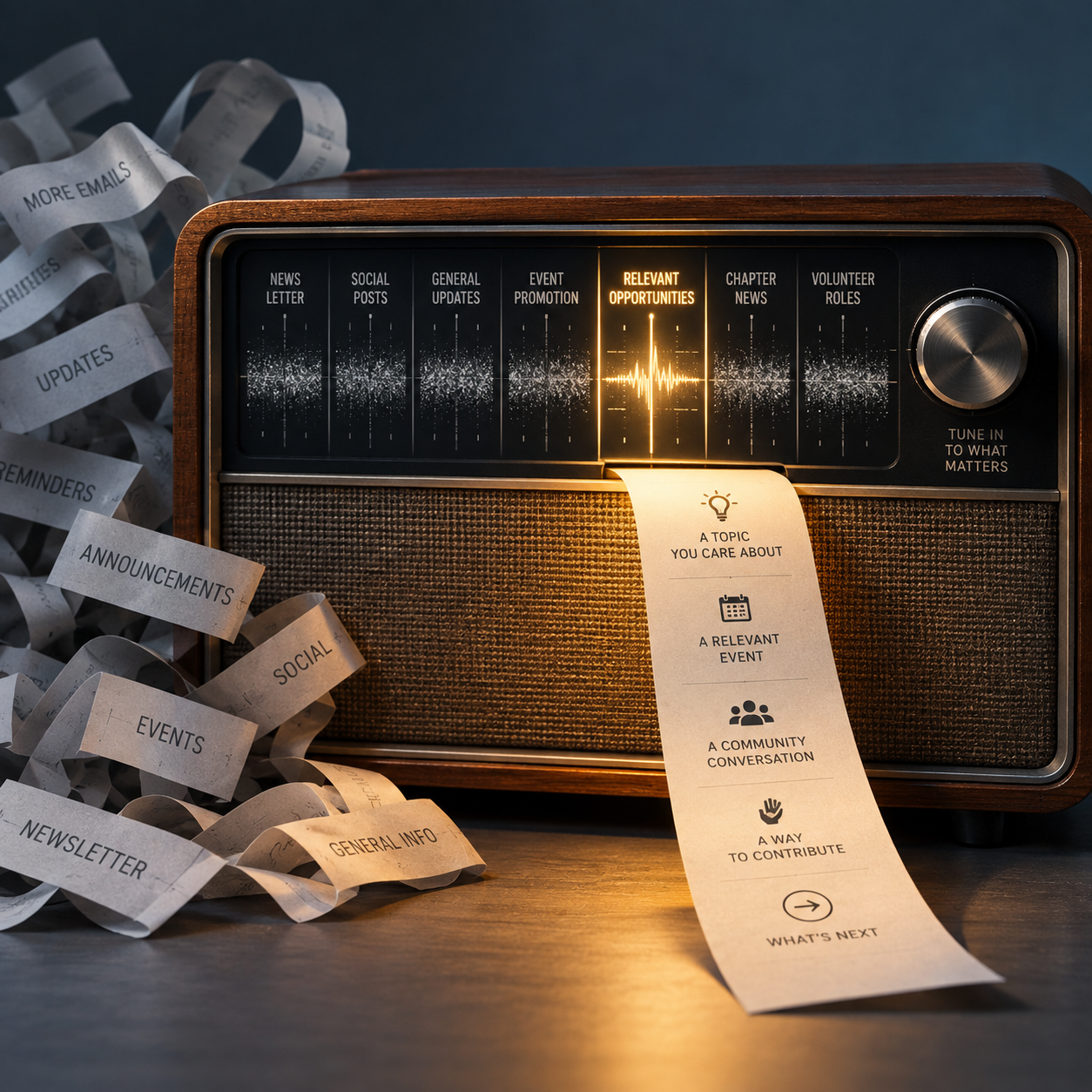
The annual conference goes well. Attendance is strong, conversations are energising, and members leave with renewed enthusiasm for the organisation and the people around it. Then the calendar opens up again. A few follow-up emails go out, the newsletter resumes, chapter updates appear in different places, and within a few months the team is working hard to rebuild attention that felt much stronger only weeks earlier.
Imagine an association with one flagship annual conference, several webinars, regional chapter events, volunteer committees, and ongoing professional development activity. Members are not short of information. They receive email updates, website announcements, social posts, and occasional invitations. The problem is that those communications do not always create continuity. Members may still wonder what is happening, which activities are relevant to them, where conversations from the conference continued, or what they should do next.
That is the real opportunity for communication between association events. Filling the calendar with more messages will not get there. What helps members is remaining connected to the community and finding meaningful reasons to participate throughout the year.
What Does Member Communication Between Association Events Actually Mean?
Member communication between association events is the ongoing communication system an association uses to help members stay informed, discover relevant opportunities, maintain connection, and continue participating between major event moments. That is broader than a newsletter. It includes how the association helps members understand what is happening, who is involved, where they fit, how they can participate, and what they should do next.
A newsletter may contribute to that system. So might event follow-up, chapter communication, community discussions, volunteer invitations, member stories, webinars, or topic-based updates.
The distinction is important. A communication calendar asks what we should send this month. A participation-led approach asks what members should be able to discover or do next. That change in perspective can make year-round communication much more useful.
Why Communication Often Weakens Between Major Events
Most associations already communicate regularly. The problem is rarely complete silence. More often, communication becomes fragmented. The events team promotes upcoming activities. Membership staff send updates. Chapters communicate locally. Volunteers use their own channels. The website contains one set of information while email contains another. Useful conversations from the annual conference may remain with the people who happened to be involved.
Individually, none of those channels is necessarily a problem. The difficulty is that members experience the association across all of them. Someone may attend a conference session on a topic they care about, but the next email they receive has no relationship to that interest. Another member may say they want to volunteer but never see the right opportunity. A new attendee may leave the annual event enthusiastic and then receive the same general newsletter as someone who has been involved for ten years.
The association is communicating, but the member journey is not always clear. As an association's event, chapter, and member activity grows, treating communication as a series of isolated updates makes it harder to maintain relevance and continuity across the year. Strong year-round communication needs to do more than keep the organisation visible. It needs to maintain enough context that members can continue moving through the community without starting from zero at every event.
What Effective Communication Between Events Should Achieve
A useful between-events engagement approach should do five jobs.
1. Keep the community visible
Members should not feel that the association disappears once the annual conference finishes. This does not mean constant messaging. It means maintaining enough useful activity that members understand the community is still moving. That might include smaller events, chapter activity, discussions, resources, contribution opportunities, or updates connected to issues members already care about. Visibility creates continuity.
2. Make relevance easier to find
Not every update will matter equally to every member. A graduate member may care about different opportunities from an experienced industry leader. A member in one region may have access to different events from someone elsewhere. Someone focused on regulation may not need every update related to professional development.
Better communication helps reduce irrelevant noise. Where appropriate, use information such as member interests, location, previous event attendance, chapter affiliation, professional role, topic engagement, and contribution history. The aim is making relevant opportunities easier to recognise, which takes far less than extreme personalisation.
3. Guide members towards participation
Communication should lead somewhere. An update might help a member register for an event, join a discussion, reconnect with another attendee, volunteer, contribute to a working group, explore a topic, or attend something for the first time. If every communication simply delivers information, members can stay informed without becoming more involved. The strongest approach makes the next useful action visible.
4. Carry event momentum forward
Events create valuable signals. Members attend particular sessions. They ask questions. They meet people. They express interest in topics. They speak with sponsors. They offer to help. Those signals should influence what happens afterwards. For more practical ideas on keeping participation moving after major gatherings, see Member Engagement Ideas Between Annual Events.
5. Help members find their next step
Year-round engagement becomes easier when members are not forced to work out the entire community for themselves. Someone who has just attended their first event may need another small, relevant invitation. A recurring participant may be ready to contribute. A member who expressed interest in a committee may need a direct human conversation. Communication should make those next steps easier to see.
Where Association Communication Commonly Breaks Down Between Events
Communication becomes quieter after the annual conference
A large event creates a natural communication peak. There are reminders, speaker announcements, programme updates, networking information, sponsor activity, and post-event follow-up. Once that cycle ends, the communication rhythm can become much flatter. Members do not need conference-level intensity all year. They need continuity.
Updates are regular but not relevant
Frequency can hide a relevance problem. A member may receive several emails each month and still feel disconnected if none relates to their interests or gives them a useful reason to engage. More messages do not automatically create more connection.
Information lives across too many places
One event is promoted by email. Another appears only in a chapter group. Discussions happen somewhere else. Volunteer opportunities sit in a form that only some members see. Members should not need to become experts in the association's internal channel structure to participate.
Event conversations are not carried forward
A member may leave a conference with several useful conversations, a topic they want to explore, and new professional relationships. If all subsequent communication ignores that context, the community effectively resets.
Follow-up becomes generic
"Thanks for attending" is useful as acknowledgement. It is rarely enough as a participation strategy. A stronger follow-up asks what might logically come next.
Broadcast Communication vs Participation-Led Communication
This is one of the most useful distinctions for associations to make.
Broadcast communication asks what we should send, when we should send it, which channel should carry it, and how many members opened or clicked. Those questions matter, but they are mainly about distribution.
Participation-led communication asks what members should be able to discover, what should feel relevant right now, which action should become easier, what useful event signal we can carry forward, and what someone should be able to do next. This shifts communication from an output to part of the member experience. A message succeeds when it helps a member make progress through the community, and delivery alone does not prove that.
The Between-Events Engagement Framework
A practical year-round communication model can be built around five steps.
1. Maintain visibility
Members should be able to see that the community remains active between major events. That might include upcoming chapter events, webinars, working groups, member-led discussions, community stories, volunteer opportunities, useful resources, and professional development activity. The objective is continuity rather than constant promotion.
2. Increase relevance
Use available member context to make communication more useful. Someone who attended a specific conference session may be interested in a follow-up discussion. A chapter member may care more about a regional event. A new member may benefit from an introductory activity rather than a leadership opportunity. Relevance increases the chance that communication leads to action.
3. Guide participation
Every communication does not need a large call to action, but members should regularly have a clear way to participate: attend, reply, join, connect, contribute, volunteer, continue a discussion, or explore another activity. A simple, relevant next step is usually more useful than presenting every possible option at once.
4. Carry forward event signals
Do not treat the event as a closed chapter. Use appropriate signals such as attendance, session interest, questions, topic engagement, new connections, chapter interest, volunteer interest, and sponsor interaction to help shape what members see next.
For more on creating engagement before attendees arrive, see Great Events Don't Start Cold. If pre-event interest and post-event follow-up are connected, the annual conference becomes part of a longer participation journey rather than an isolated peak.
5. Prompt the next step
Communication should help momentum move forward before it fades. Someone who attended for the first time might receive a relevant second-event invitation. A repeat participant may be shown a contributor opportunity. Someone who indicated an interest in volunteering may need personal outreach. The next step does not always need to be automated. It simply needs to be visible.
What Should Associations Communicate Between Major Events?
The aim is to keep participation visible, relevant, and easier to act on between major events, so a useful communication plan should include more than promotional reminders.
Smaller and local events. Chapter activities, webinars, roundtables, workshops, and informal gatherings give members more frequent opportunities to participate. They can also create lower-friction entry points for members who find the annual event too large or infrequent.
Follow-up from recent events. Do not let event content disappear as soon as the event closes. Communication might continue with discussion questions, related resources, speaker insights, topic-based follow-up, another relevant activity, or community conversations. The aim is to extend useful interest rather than simply distribute recordings.
Member stories. Member stories can make the community more visible through people rather than organisational announcements. Show how members are participating, contributing, collaborating, volunteering, or using the community. This can also help newer members see what involvement looks like in practice.
Contribution and volunteer opportunities. Not every member wants to lead, but those who are ready to contribute should be able to recognise the opportunity. Communication can surface committee involvement, event hosting, mentoring, working groups, volunteering, speaking, content contribution, and chapter support.
Topic-based communication. Members often organise their attention around problems and interests rather than internal association structures. Use relevant topics to connect content, events, discussions, and people.
Community navigation. Sometimes the most useful communication simply helps members understand where to go. Remind people how to find upcoming activity, local chapters, relevant contacts, community discussions, participation opportunities, and event information. Good navigation reduces the amount of effort members need to spend finding the community.
How to Carry Event Momentum Forward
The annual conference often gives associations their richest concentration of participation signals. Members reveal what they care about through the sessions they choose, people they meet, questions they ask, discussions they join, and opportunities they explore. The mistake is treating all of that as event-only information.
Imagine a member attends a session on regulatory change. Instead of receiving only a general post-event email, the association might later surface a follow-up webinar on the same topic, a relevant working group, a discussion involving the speaker, another member active in the same area, a resource connected to the issue, or a regional event where the topic will continue.
The communication is more useful because it preserves context. This is where strong year-round engagement starts to function as community infrastructure. It turns:
Event → Follow-up email → Silence
into:
Event → Relevant follow-up → Another participation opportunity → Continued involvement
What Should Be Automated and What Should Stay Human?
Associations do not need staff to manually send every reminder or follow-up, but they should also avoid turning the member experience into an entirely automated journey.
Automation can help with event confirmations, reminders, recurring updates, post-event follow-up triggers, interest-based prompts, profile completion reminders, relevant event suggestions, standard participation invitations, and internal alerts when useful engagement signals appear. These are repetitive tasks where consistency can reduce staff workload.
Some interactions need judgement and context: volunteer conversations, leadership development, sensitive member concerns, personal introductions, sponsor or partner relationships, community hosting, contributor development, and high-intent member outreach. Automation should protect time for these human moments. For more on the role people play in helping members participate, see Why Events Need Community Hosts, Not Just Agendas.
Member Communication Signals Worth Tracking
Communication metrics become more useful when they help the team decide what should happen next.
| Signal | What it may indicate | Possible next step |
|---|---|---|
| Annual event attendance | The member has recently engaged | Offer relevant follow-up or another activity |
| Repeat event attendance | Participation may be deepening | Introduce contribution opportunities |
| Topic interest | The member has shown relevance | Surface related events, discussions or resources |
| Chapter engagement | Local participation may be meaningful | Highlight additional local opportunities |
| Profile completion | The member is providing more context | Improve relevance and connection opportunities |
| Volunteer interest | The member may be ready to contribute | Trigger human follow-up |
| Discussion participation | The member is engaging beyond attendance | Invite deeper participation where appropriate |
| Drop-off after a major event | Event energy did not become continuity | Review the follow-up journey |
| No activity despite recent attendance | The next step may not be clear | Simplify or personalise the next invitation |
The most useful signals are the ones that help the team decide what communication, invitation, introduction, or human follow-up should happen next. A higher email-open rate can be encouraging. Knowing that first-time conference attendees are joining a second activity tells the association much more about whether communication is supporting continued participation.
Common Mistakes in Member Communication Between Events
Going quiet between major events. Members should not only hear from the association when conference registration opens. Maintain a useful rhythm throughout the year without turning communication into noise.
Sending more messages without creating more relevance. Frequency does not solve irrelevance. Before increasing communication volume, ask whether members can recognise why the message matters to them.
Treating every member the same. Members have different interests, locations, histories, goals, and participation levels. They do not all need completely unique communication, but meaningful differences should influence the journey.
Letting event momentum disappear. A successful conference can create relationships, interests, questions, and enthusiasm. If none of that shapes subsequent communication, much of the community value is lost.
Relying on scattered channels without a clear participation path. Multiple channels are not automatically a problem. The problem is when members do not know where to look or what to do next. Your communication system should make the community easier to navigate.
Keeping Participation Possible
Strong member communication between association events keeps participation possible, which is a bigger job than keeping members informed. Members should be able to see what is happening, recognise what matters to them, understand where they fit, and find a meaningful next step without waiting for the next annual conference. The strongest communication strategy does more than bridge the gap between events. It turns those gaps into part of the community experience.
Looking to Build Stronger Engagement Between Association Events?
SixSides helps associations reduce manual coordination and create clearer participation experiences before, during, and after events. If your team is looking at member communication as part of a broader year-round engagement strategy, book a demo to see how it could work in practice.
Give your event a community that lasts
A branded app where members show up before day one and stay long after the close. We'll walk you through it.