Blog
Nonprofit Community Growth: How Small Teams Can Increase Participation Without More Admin
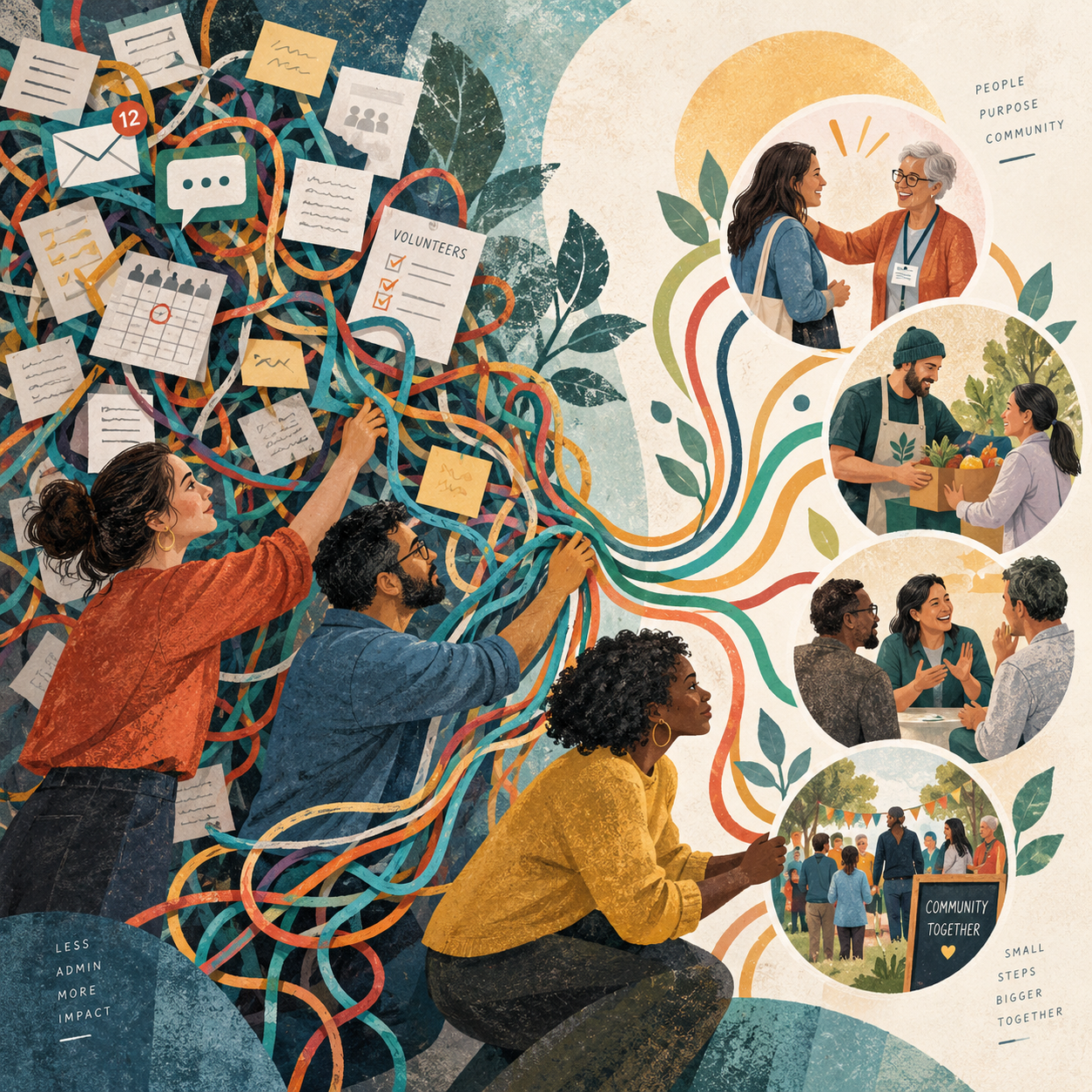
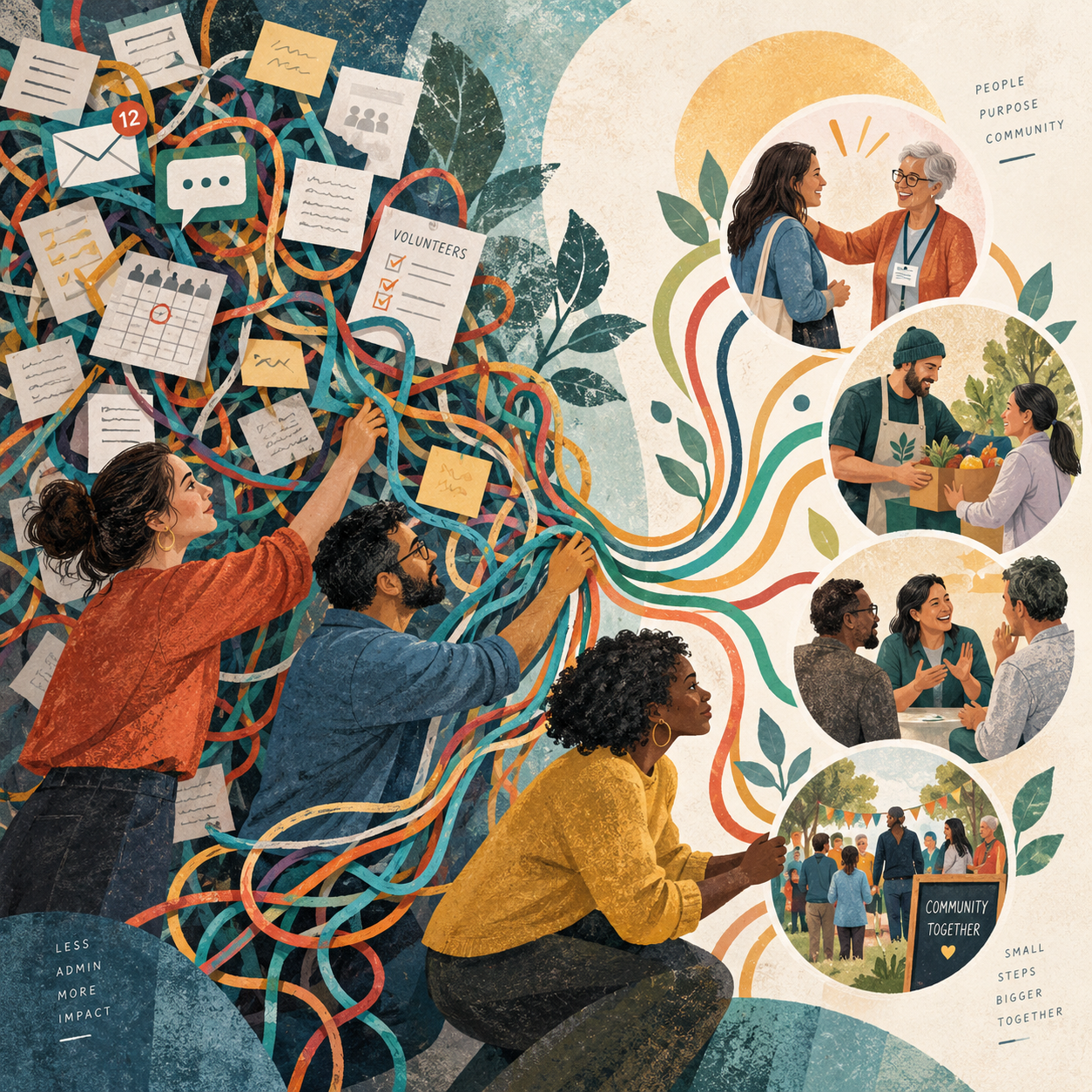
Small nonprofit teams often have more community interest than they have staff time to support. People attend events, ask useful questions, offer to help, meet others, and show signs that they care about the mission. But once the event ends, the team is back to delivery, reporting, inboxes, volunteer coordination, funding updates, and planning the next activity. That is where community participation often starts to fade.
Imagine Maria, a programme coordinator at a small nonprofit running a Saturday community information session for 90 people. The room is full, three new attendees say they would like to help, two long-term volunteers offer to introduce friends, and several people ask about the next local activity. On the day, the event feels successful.
By Monday, the signals are scattered. One volunteer offer is in a paper form. A few questions are sitting in the event inbox. The attendee list is in a spreadsheet. Follow-up is being drafted manually. The team knows there was interest, but turning that interest into repeat participation is already becoming another admin task.
Small nonprofit teams do not usually struggle because members, volunteers, or supporters lack goodwill. They struggle because opportunities, event updates, volunteer roles, follow-up, and next steps are spread across inboxes, spreadsheets, forms, social posts, and staff memory. That makes community building harder to see, harder to support, and harder to repeat.
The stronger question is not simply, “How do we get more people involved?” It is, “How do we make participation easier to continue without creating more work for the team?”
What Nonprofit Community Growth Really Means
Nonprofit community growth is not just about getting more people to attend events, follow social pages, or join a mailing list. Those numbers can be useful, but they do not prove that the community is becoming stronger.
A healthier measure is whether people are moving into deeper, repeatable participation. Someone might start as an observer, attend one activity, return for another, offer a small contribution, become a volunteer, help organise a local moment, and eventually become a community leader.
A simple progression might look like this:
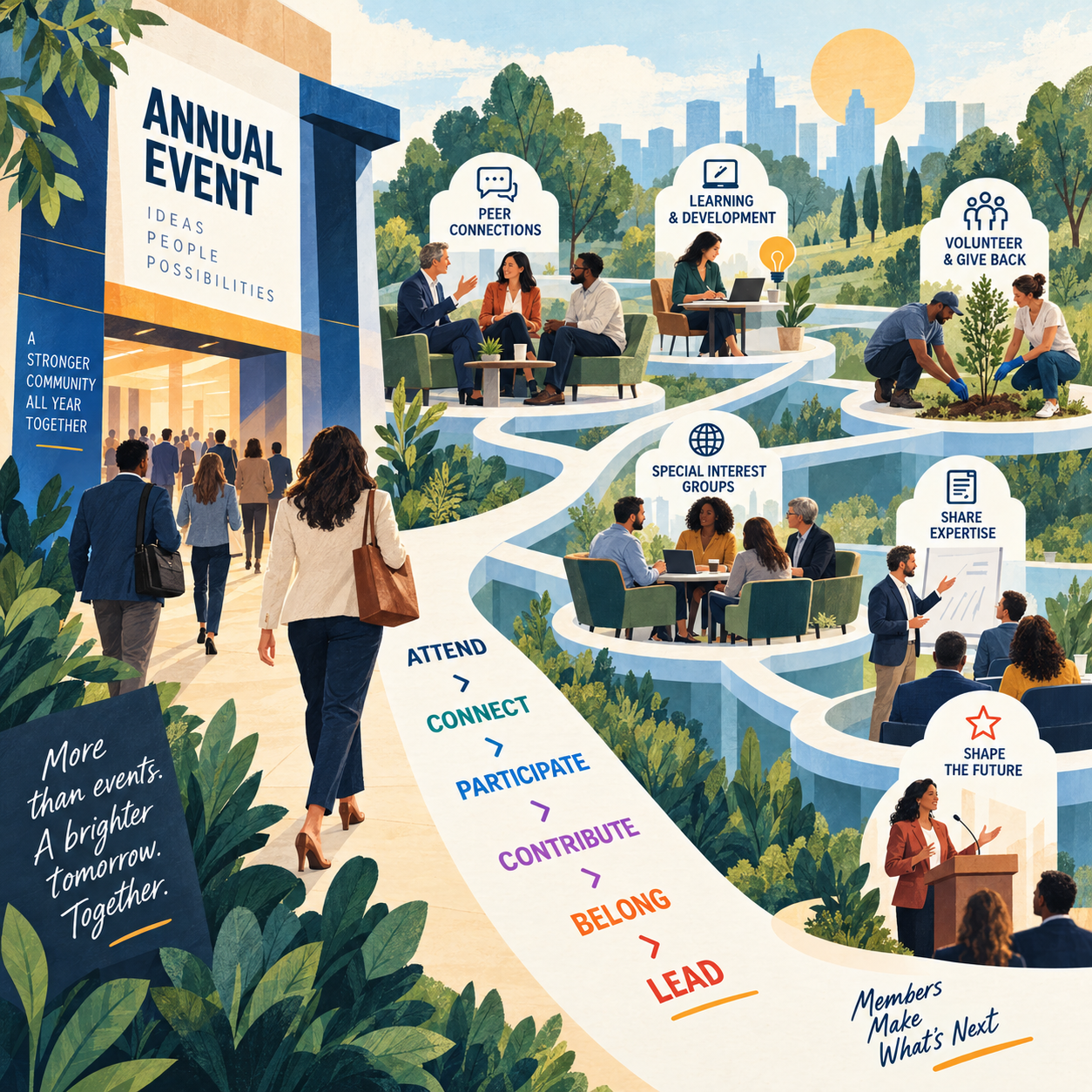
Observer → Attendee → Returner → Helper → Volunteer → Organiser → Leader
That progression matters because small teams cannot manually carry every relationship forever. Community growth becomes more sustainable when people can see how to enter, how to help, and what the next step looks like.
For nonprofit teams, the goal is not to create a bigger programme for the sake of it. The goal is to make useful participation easier to discover, easier to repeat, and easier to support.
Why Small Nonprofit Teams Struggle to Sustain Engagement
Most small nonprofit teams are not short on effort. They are often short on capacity, visibility, and repeatable systems.
The same pattern appears often. An event brings people together, but follow-up is generic. Volunteers are willing to help, but roles are not clearly visible. Newcomers want to participate, but do not know where they fit. Staff know who showed interest, but that knowledge sits in someone’s inbox or memory. The same reliable people keep contributing, while newer supporters remain on the edge.
This creates a fragile engagement model. It depends on staff manually remembering who said what, who needs a follow-up, which volunteer role is still empty, and which attendee might be ready for another step. That may work when activity is small, but it becomes harder as community interest grows.
The issue is not that every nonprofit needs a bigger team or more tools. The issue is that participation needs a clearer pathway. When people can see what is happening, where they fit, and how to take one small next step, community growth becomes easier to sustain.
The Before, During, and After Model for Nonprofit Community Growth
A practical way to improve nonprofit community participation is to design the journey around what happens before, during, and after each activity.
Before the Activity
Before an event or community moment, people need more than logistics. They need context. They should understand what the activity is for, who it is for, what will happen, and how they can participate.
For newcomers, this might mean a simple “New Here?” page that explains what to expect, where to go, what to bring, accessibility details, who they might meet, and how to ask for a welcome. This reduces uncertainty and makes the first step feel less intimidating.
For a related view on why engagement should begin before the day itself, see Great Events Don’t Start Cold.
During the Activity
During the activity, people need visible entry points. They should not have to guess who to speak to, how to help, or whether they are welcome to participate.
This is where volunteers, hosts, or ambassadors can make a big difference. They can welcome newcomers, introduce people around shared interests, explain small ways to help, and notice when someone is present but not yet participating.
For more on this hosting layer, see Why Events Need Community Hosts, Not Just Agendas.
After the Activity
After the activity, people need a next step while their interest is still warm. Without that, even strong attendance can become a one-off moment.
A simple follow-up loop might thank participants, recognise helpers, ask one short question about belonging or interest, share the next relevant activity, and invite one small contribution. The aim is not to send more communication. It is to make the next step clear.
10 Low-Lift Ways to Grow Nonprofit Community Participation
1. Create One Clear “What’s Happening and How to Help” View
Many nonprofits already have opportunities for people to get involved, but those opportunities are often scattered. One activity may be promoted by email, another on social media, another through a volunteer coordinator, and another through a form that only regular supporters know exists.
A simple shared view can reduce that friction. It might include upcoming events, small volunteer roles, local activities, donation drives, newcomer sessions, and ways to contribute without a long-term commitment.
The goal is not to build a complex portal. It is to give people one place to understand what is happening and how they can take part.
2. Offer Micro-Volunteering Roles
Not every supporter is ready for a major commitment. Some people may not be able to join a committee, lead a programme, or commit to a recurring volunteer shift. But they may be willing to help with one small action.
Micro-volunteering roles might include welcoming attendees, setting up chairs, sharing an event with a friend, making one introduction, packing materials, taking photos, helping with registration, or following up with one newcomer.
These smaller roles make contribution easier to say yes to. They also help reduce reliance on the same small group of regular volunteers.
3. Build a “New Here?” Page for Events and Activities
Newcomers often need reassurance before they participate. They may want to know what will happen, whether they need to bring anything, who they will meet, how long they need to stay, and whether it is okay to attend alone.
A simple “New Here?” page can answer those questions before they become barriers. It does not need to be complicated. It should explain the activity in plain language, describe what to expect, and show people how to ask for help or a welcome.
This is especially useful for nonprofits serving people who may feel unsure, isolated, time-poor, or unfamiliar with the organisation.
4. Use a Two-Step Follow-Up Within 48 Hours
Post-event follow-up often becomes too broad or too late. A small nonprofit team may intend to personalise every message, but other priorities take over.
A simple two-step follow-up can help. First, send a timely thank-you that recognises participation and points to the next relevant activity. Second, ask one light question that helps the team understand what the person may want next.
For example: “Would you like to attend again, help next time, receive resources, or speak with someone from the team?” That one question can turn a generic follow-up into a practical participation signal.
5. Ask Every Attendee for One Small Next Action
A common mistake is asking too much or asking nothing at all. After an event, some supporters are ready for a next step, but they may not know what is useful.
A better approach is to offer one small next action. That could be joining the next activity, sharing a resource, bringing a friend, choosing a topic of interest, offering one hour of help, or joining a follow-up discussion.
The next step should feel achievable. The easier it is to act, the more likely participation becomes.
6. Turn Volunteers Into Hosts, Not Just Helpers
Volunteers are often asked to complete tasks, but they can also help create belonging. A volunteer who welcomes newcomers, introduces people, or explains how to participate can change the experience for someone attending for the first time.
This does not require formal training. It requires a simple brief. Who should they welcome? What should they explain? What questions should they ask? What should they do if someone wants to help again?
When volunteers act as hosts, the event becomes easier to enter. This can help people move from attending to feeling part of the community. It also helps reduce the connection gap that appears when people attend an event but leave without meeting the right people. For more on that challenge, see Why Attendees Leave Events Without Making the Right Connections.
7. Reuse Event Templates to Reduce Setup Time
Small nonprofit teams often lose time rebuilding the same activity from scratch. Invitations, reminder emails, volunteer rosters, check-in sheets, follow-up messages, and reporting notes may be recreated each time.
Reusable templates reduce that burden. A team can create a simple structure for recurring activities, then adapt only what changes: date, location, topic, roles, and next steps.
This matters because admin time competes directly with community time. The less time staff spend rebuilding repeat tasks, the more capacity they have to support participation, relationships, and follow-up.
As activity grows, reducing repeat setup work from hours to minutes can matter just as much as improving follow-up, because both affect how much capacity the team has to support people rather than manage admin.
8. Make Local or Topic-Based Touchpoints Easier to Join
Large events are useful, but smaller touchpoints often sustain community between major moments. These might be local meetups, issue-based discussions, volunteer briefings, newcomer sessions, peer circles, or short online check-ins.
The key is to make them easy to understand and join. People should know who the activity is for, why it matters, what level of commitment is expected, and what will happen afterwards.
For more on keeping participation alive between major activities, see Member Engagement Ideas Between Annual Events.
9. Track Second-Step Conversion, Not Just Attendance
Attendance shows who came. Second-step conversion shows whether the activity led somewhere.
For small nonprofit teams, this can be one of the most useful community growth signals. Did a first-time attendee come back? Did a supporter offer to help? Did a volunteer join another activity? Did someone move from interest to contribution?
This does not need to become a complex analytics exercise. Even a simple record of who took another step within 30, 60, or 90 days can help the team understand whether participation is growing or fading.
10. Recognise Contribution Quickly and Visibly
Recognition is one of the simplest ways to reinforce participation. When people help, they should feel that their contribution mattered.
This can be as simple as thanking volunteers in a follow-up message, recognising helpers at the next activity, mentioning a contribution in a community update, or sending a personal note. The key is to connect recognition to action.
People are more likely to keep contributing when they can see that their effort helped the mission, the event, or the wider community.
What Nonprofit Teams Should Capture
A practical nonprofit community growth model should show what to capture, how to capture it, who it helps, and what decision it should inform.
| What to capture | How to capture it | Who it helps | What decision it informs |
|---|---|---|---|
| First-time to second-step conversion | Track whether new attendees join another activity, volunteer, reply to follow-up, or choose a next step within 30 to 90 days | Programme, community, and volunteer teams | Whether newcomer pathways are clear enough |
| Micro-volunteering interest | Short forms, post-event prompts, volunteer role clicks, or follow-up replies | Volunteer coordinators | Which small roles should be offered more visibly |
| Repeat participation | Attendance across events, local activity joins, discussion participation, or supporter history | Leadership and programme teams | Whether community involvement is recurring or one-off |
| Newcomer confidence | “New Here?” page views, welcome requests, first-timer questions, or post-event feedback | Event and community teams | Where onboarding needs to be clearer |
| Host or volunteer activity | Host notes, welcome moments, introductions made, roster completion, or volunteer check-ins | Community and operations teams | Which volunteers need support, recognition, or clearer roles |
| Opportunity visibility | Clicks on event pages, volunteer page visits, role views, topic selections, or repeated questions | Communications and community teams | Whether people can easily find where they fit |
| Post-event momentum | Follow-up replies, resource engagement, next activity registrations, or ongoing discussion | Programme and leadership teams | Whether event energy is turning into continued participation |
| Admin effort per activity | Setup time, manual follow-up, duplicate entry, repeated coordination tasks, or reporting time | Operations and leadership teams | Where templates, automation, or clearer workflows could reduce burden |
This measurement does not need to be heavy. The aim is not to track everything a person does. It is to understand whether people are moving from one-off attendance into repeat participation, contribution, and belonging.
How to Use These Signals
Collecting community data is only useful if it helps the team make better decisions. For small nonprofits, the goal is not to create a larger reporting burden. It is to make participation easier to support.
If first-time to second-step conversion is low, the team may need a clearer newcomer pathway or faster follow-up. If micro-volunteering interest is high but actual participation is low, the roles may be too hard to find or too large to commit to.
If repeat participation is weak, the issue may not be lack of goodwill. It may be that people do not see the next relevant activity soon enough. If admin effort rises with every event, the team may need reusable templates, clearer volunteer workflows, or more automated follow-up.
Better visibility helps small nonprofit teams stop relying only on memory, inboxes, and scattered notes. It gives them a clearer view of who is interested, who is returning, who may be ready to help, and where participation is getting stuck.
Common Mistakes Small Nonprofit Teams Make
Even committed nonprofit teams can make community growth harder than it needs to be.
Mistake 1: Treating Attendance as the Main Success Signal
Attendance matters, but it does not show whether people felt welcomed, connected, or ready to return. Small teams should look for signs of continued participation, not only turnout.
Mistake 2: Asking for Big Commitments Too Early
Someone may be willing to help, but not ready for a formal role. Smaller contribution options can help people build confidence before taking on more responsibility.
Mistake 3: Relying on the Same Volunteers Every Time
Reliable volunteers are valuable, but over-reliance can lead to burnout. A healthier community creates small ways for more people to contribute.
Mistake 4: Sending Generic Follow-Up
A thank-you email is useful, but it should not be the whole follow-up strategy. The strongest follow-up points people towards the next relevant action.
Mistake 5: Hiding Opportunities Across Too Many Places
If people cannot see what is happening or how to help, they are less likely to participate. Clear opportunity visibility is one of the simplest ways to reduce friction.
Final Thought
Small nonprofit teams do not need to build complex community programmes to grow participation. They need simple systems that make it easier for people to enter, return, help, and stay connected.
That means making opportunities visible, offering smaller contribution pathways, using volunteers as hosts, following up while interest is still warm, and measuring whether people take another step.
The strongest nonprofit communities do not grow by asking staff to carry more coordination. They grow by making participation easier to repeat.
Looking to Grow Nonprofit Community Participation Without Adding More Admin?
SixSides helps community-led organisations turn scattered follow-up, volunteer interest, and event participation into clearer next steps, stronger visibility, and more repeatable community growth.
For small nonprofit teams trying to turn one-off attendance into ongoing involvement without adding unnecessary coordination burden, the Book a demo option on this page is there if you want to see how that could work in practice.
Give your event a community that lasts
A branded app where members show up before day one and stay long after the close. We'll walk you through it.
.png&w=800&q=75)