Blog
Why Most Event Networking Tools Don’t Work
%20(1).png&w=64&q=75)
%20(1).png&w=1600&q=75)
Event networking is one of the most promised outcomes of conferences, trade shows, association events, and business gatherings.
Most event platforms promise to improve networking by giving attendees access to people. They may offer attendee lists, networking apps, messaging features, search filters, profiles, or AI matchmaking tools.
The promise is simple: if attendees can see who is in the room, they will have better conversations, build stronger connections, and become more engaged in the event.
But in reality, many event networking tools fail to create meaningful interaction.
Not because attendees do not want to network, but because networking does not happen just because the option exists. It happens when the experience makes taking action feel easy, relevant, and timely.
That is where many event networking platforms fall short.
They give attendees access to people, but they do not always help them understand who to connect with, why that person matters, or when to start the conversation.
Networking is not just an access problem
Most event networking apps are designed around access.
They allow attendees to browse profiles, search directories, send messages, filter by category, and see who else is attending. From a feature perspective, this makes sense. If attendees can see other people and message them, networking should happen.
But in practice, event networking rarely fails because people lack access.
It usually fails because attendees lack context, confidence, and clarity in the moment.
When an attendee opens a networking tool, they are not only asking, “Who is here?” They are also asking, “Who is relevant to me?”, “Why would this person be worth speaking to?”, and “Is this the right moment to start the conversation?”
If those questions are not answered quickly, many attendees do nothing.
They may scroll through a list, feel unsure, close the app, and go back to the agenda. The tool may be available, but the behaviour does not happen.
That is why event networking is not only an access problem. It is an initiation problem.
More networking features do not always lead to more networking
Many event networking tools focus on adding more options. They provide larger attendee directories, more detailed profiles, more filters, more messaging options, and more ways to browse the event community.
Those features may create visibility, but visibility is not the same as engagement.
In some cases, more options create more friction. An attendee may open the app, see hundreds of profiles, and have no clear direction on where to start. Instead of feeling guided, they feel overwhelmed.
This is a common failure point in event engagement.
The issue is not that the platform has no functionality. The issue is that the experience does not create enough momentum for the attendee to take the next step.
A list of people is useful, but it does not automatically create a conversation. A messaging feature is helpful, but it does not remove the uncertainty of starting with someone new. A matchmaking suggestion can be valuable, but only if the attendee understands why the connection matters.
Meaningful networking needs more than availability. It needs relevance, timing, and confidence.
What attendees actually need from event networking
To improve networking outcomes, event teams need to think less about features and more about attendee behaviour.
Most attendees are moving through a busy environment. They are choosing sessions, finding rooms, checking the agenda, speaking with people they already know, visiting sponsors, and deciding how to spend their limited time.
In that kind of setting, networking needs to feel simple and worthwhile.
The first thing attendees need is context. They need to understand why a person is relevant to them. That relevance could come from a shared interest, a similar role, a common challenge, a useful area of expertise, or a reason to continue a conversation after a session.
Without context, networking feels random and low priority.
The second thing attendees need is timing. Even a relevant connection may not happen if the moment feels wrong. Networking works best when it fits naturally into the rhythm of the event, such as before sessions, during breaks, around shared topics, or after a meaningful discussion.
If the tool only sits passively in the background, many attendees will not use it at the right moment.
The third thing attendees need is ease. Starting a conversation should not require too much searching, filtering, comparing, or guessing. If the next step is unclear, most people will hesitate.
The fourth thing attendees need is confidence. They need a reason to believe the interaction is worth starting. Confidence is built when the connection feels relevant, the timing makes sense, and the path into conversation feels natural.
This is what turns networking from an available feature into an actual attendee behaviour.
The real challenge is helping people take the first step
The hardest part of networking is often not finding people. It is starting.
Many attendees are willing to connect, but they do not always want to make the first move without a reason. They do not want to interrupt someone. They do not want to send a cold message that feels awkward. They do not want to approach a sponsor or another attendee without knowing whether the conversation will be useful.
This is especially true for people who are attending alone, new to the community, or less confident in networking environments.
If an event relies only on attendees to figure this out themselves, the networking experience becomes uneven. Confident attendees may leave with strong connections, while others leave with very little beyond the sessions they attended.
That does not mean the event failed operationally. It may have been well run, well attended, and well organised.
But it does mean the event missed an opportunity to help more people participate.
From networking features to networking behaviour
Most event technology conversations focus on features and functionality. The question often becomes, “What networking tools do we provide?”
A better question is, “How do we make networking easier to start?”
That shift changes the way event teams think about engagement. Instead of focusing only on access, they begin to focus on behaviour. Instead of asking whether attendees can message each other, they ask whether attendees understand who is relevant, why the connection matters, and how to take action at the right time.
This is where stronger event networking design begins.
The goal is not to force conversations or make networking feel artificial. The goal is to reduce the uncertainty that stops people from participating.
When attendees can see relevance more clearly, they are more likely to act. When the next step feels simple, they are more likely to start. When the connection fits naturally into the event experience, networking feels less random and more valuable.
Better networking design creates stronger event value
For associations, membership organisations, conferences, and sponsor-backed events, networking is not just a nice extra. It is often one of the main reasons people attend.
Attendees want to meet useful peers, discover opportunities, speak with relevant partners, connect with sponsors, and feel part of a wider professional community.
When networking is weak, the impact reaches beyond the individual attendee. Sponsors may have fewer meaningful conversations. Members may feel less connected to the community. Speakers may lose opportunities for follow-up. Organisers may struggle to carry momentum beyond the event itself.
That is why networking design matters.
A better approach does not start by adding more features. It starts by designing the event experience around relevance, participation, and connection.
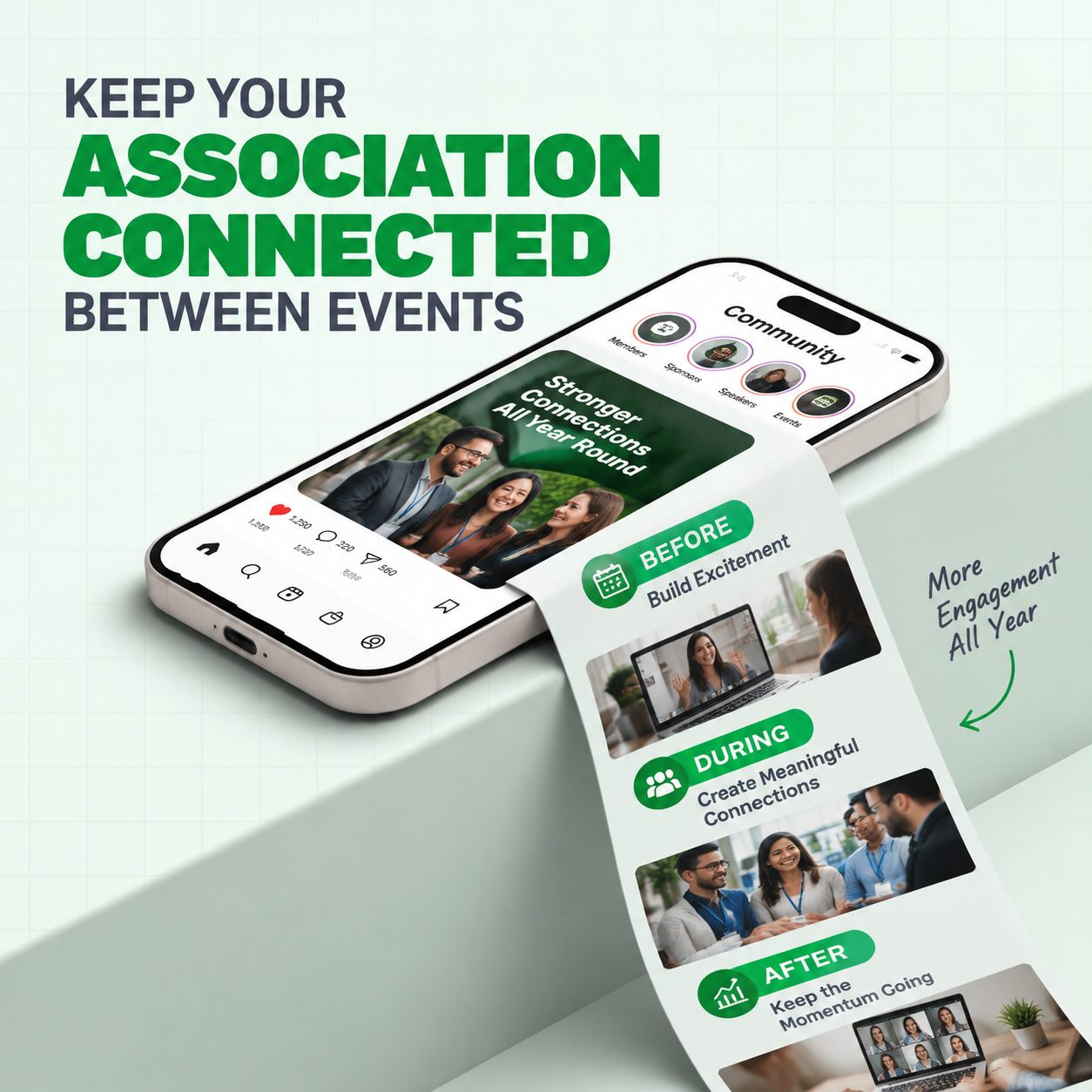
This is where community-led event engagement becomes important. Events should not only help attendees consume content. They should help people discover who matters, why the connection is useful, and how to continue the conversation beyond the event.
Final thought
If networking is not happening at an event, it is not always because attendees are unwilling to connect.
Often, it is because the experience is not helping them take the first step.
Improving event networking is not about adding more tools for the sake of it. It is about reducing friction, increasing relevance, and giving attendees more confidence to act.
Because relationships do not start with visibility alone.
They start with momentum.
The events that create the strongest networking outcomes are the ones that make connection feel easier, more relevant, and more natural throughout the event journey.
Looking to create more meaningful connections at your events?
Book a call with the SixSides team to see how community-led event engagement can improve attendee participation, networking, and event outcomes.
Give your event a community that lasts
A branded app where members show up before day one and stay long after the close. We'll walk you through it.
.png&w=800&q=75)