Blog
Why Event Apps Fail: People Say One Thing, But Do Another
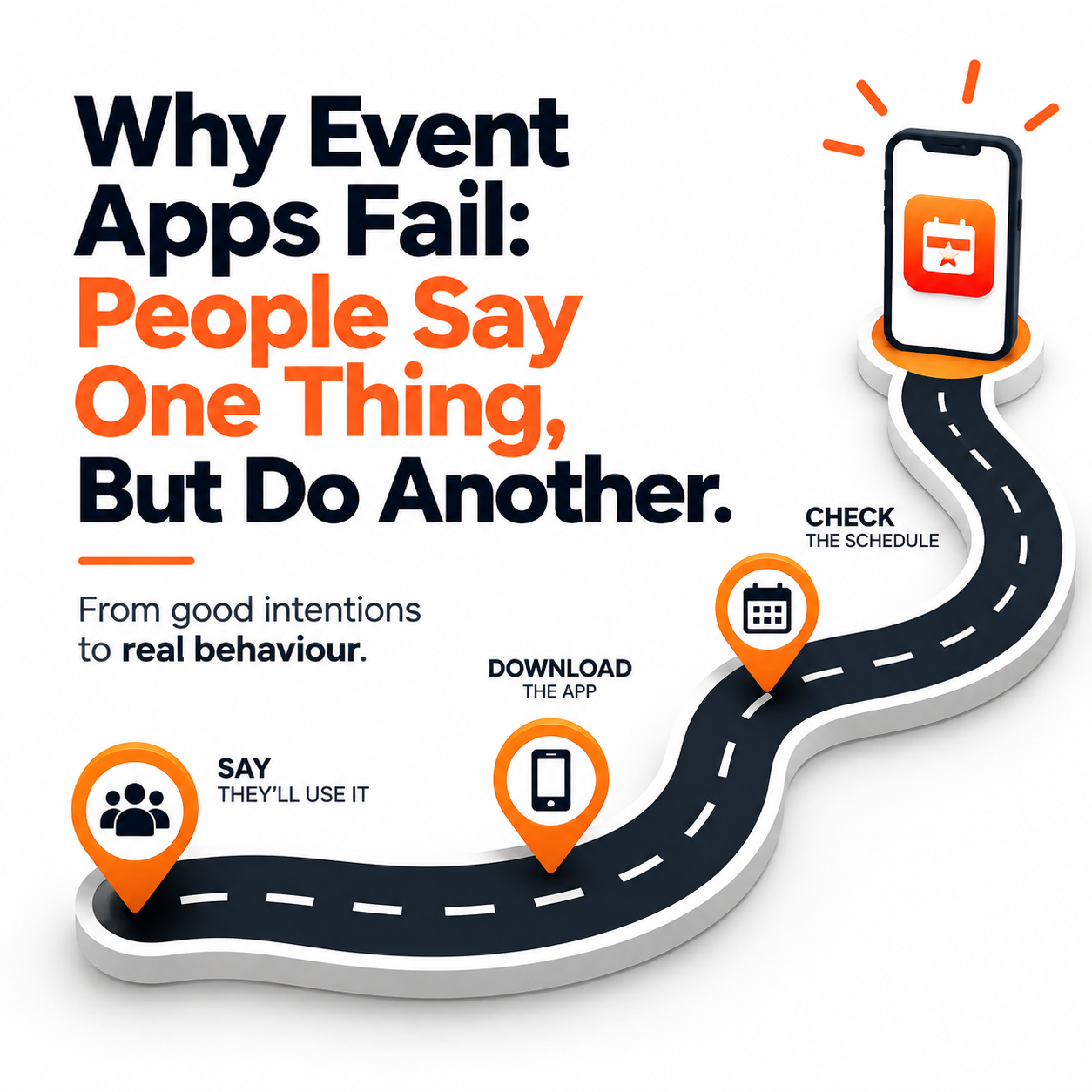
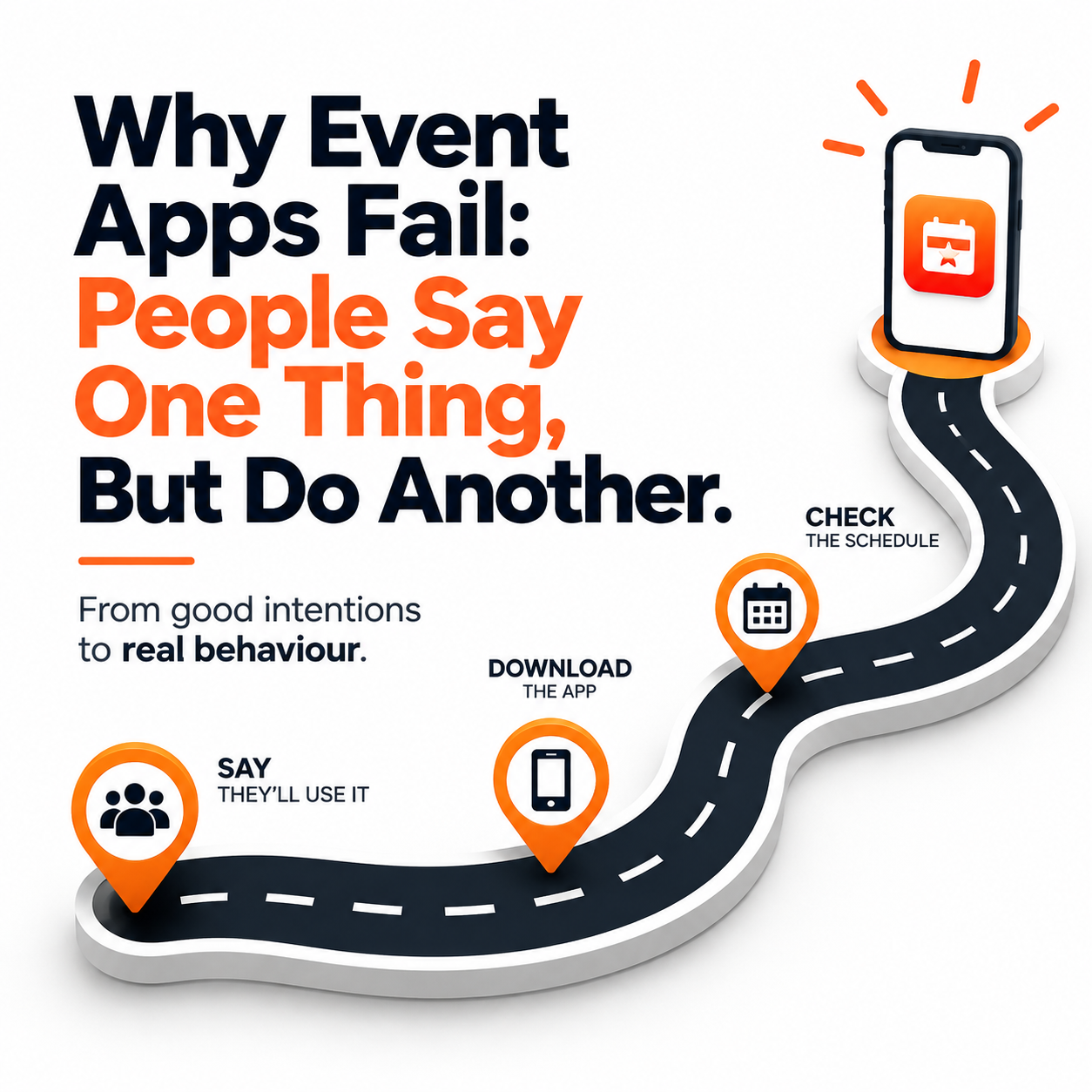
Most event apps are designed around what attendees say they want. The problem is that people don't always behave the way they say they will, and this gap is one of the biggest reasons event technology fails to drive real engagement.
Organisers tend to rely on feedback, surveys and assumptions rather than observing actual attendee behaviour. But feedback reflects intention, not action. Ask attendees before an event and they'll tell you they plan to use the networking features, explore the content library, and engage with sponsors. On the day, most default to whatever feels easiest, fastest and most familiar: checking the schedule, then closing the app.
This isn't dishonesty. It is just how people work. In a survey, saying yes costs nothing. At a live event, every action competes with a conversation happening two metres away, a coffee queue, and a phone full of notifications. Intentions formed in a quiet moment rarely survive contact with a busy exhibition floor.
The gap between what people say and what they do creates friction, and friction reduces participation. When an app is built around stated preferences, it fills up with features attendees claimed to want but never open. The issue isn't adoption. It's misreading behaviour.
4 tips to improve event app engagement
1. Design for real behaviour
Focus on how attendees actually act during events: busy, distracted and time-poor, usually holding a phone in one hand and a coffee in the other. Your app needs to work within that reality, not the calm, focused version of the attendee who filled in your pre-event survey. If a feature only makes sense when someone sits down and concentrates, it won't get used on the day.
2. Reduce effort at every step
If something takes too long to understand or complete, people ignore it. Every extra tap, form field or ambiguous menu label filters out another slice of your audience. Simplicity drives usage. An attendee should be able to find the next session or a relevant person in seconds, not after a tour of the interface.
3. Prioritise immediate value
Users need to see a clear benefit straight away. If the first thing your app offers is a profile-completion form rather than something useful, such as today's agenda, a relevant introduction or directions to the room they need, the payoff isn't obvious and engagement drops before it starts. Lead with the value; earn the data later.
4. Measure what people do, not what they say
Track real interactions: taps, time spent, feature usage, drop-off points. Behavioural data is far more reliable than post-event feedback, because it captures decisions people made under real conditions. If your analytics show that 80 per cent of sessions are attendees checking the schedule and leaving, that tells you more than any satisfaction score.
Build on observation, not assumption
The best event experiences are not built on assumptions; they are built on observation. A useful question to ask of every feature and every screen is simple: are we designing for what people say they'll do, or for what they actually do?
Higher engagement doesn't come from more features or more feedback. It comes from understanding behaviour and removing whatever stands between an attendee and a useful action. If you want your next event to feel genuinely engaging rather than just well-equipped, SixSides can help. We share the thinking, frameworks and real-world behavioural insight to help you design for how attendees actually behave. Get in touch to see how it applies to your event.
Give your event a community that lasts
A branded app where members show up before day one and stay long after the close. We'll walk you through it.