Blog
The Best Events Are No Longer Built on Content Alone
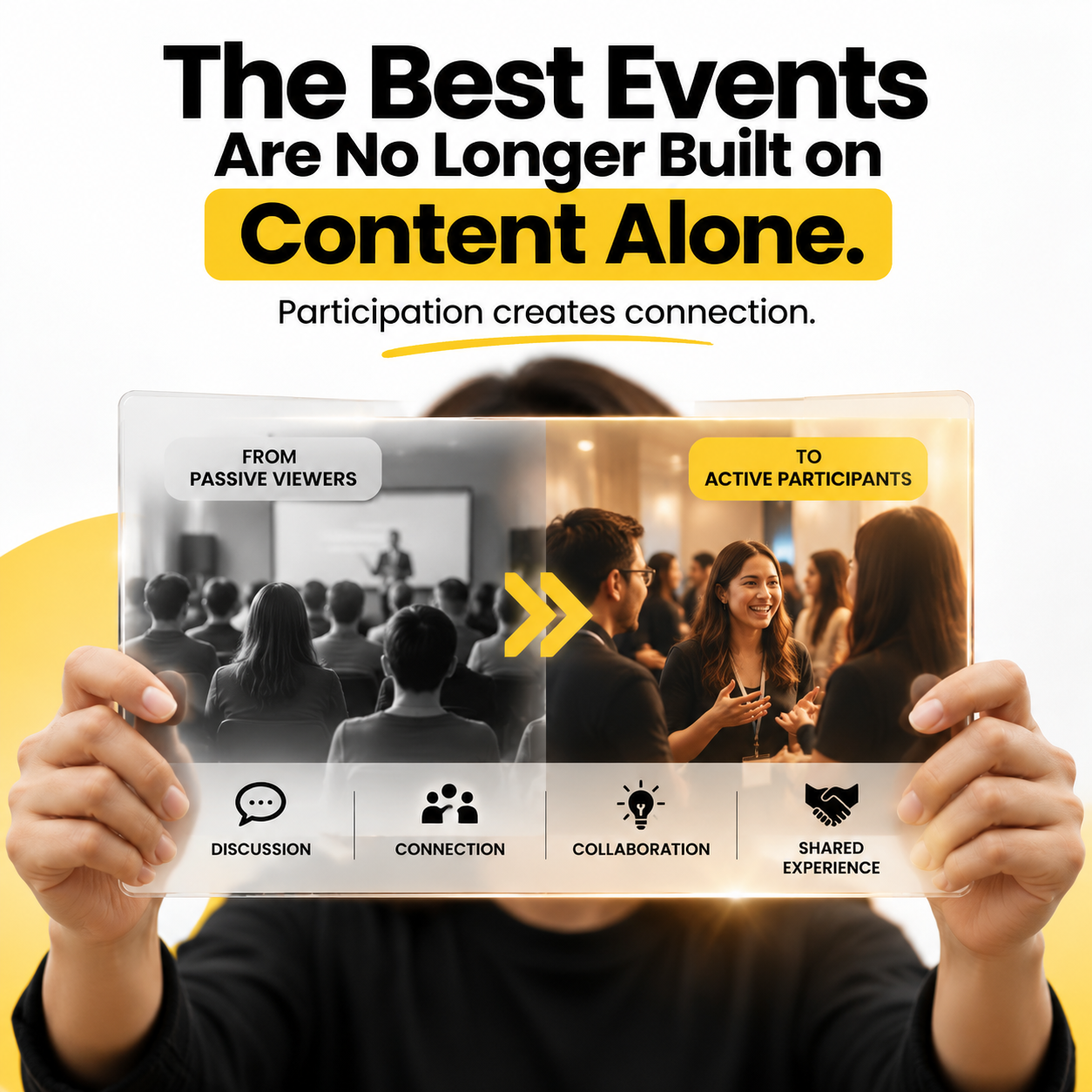
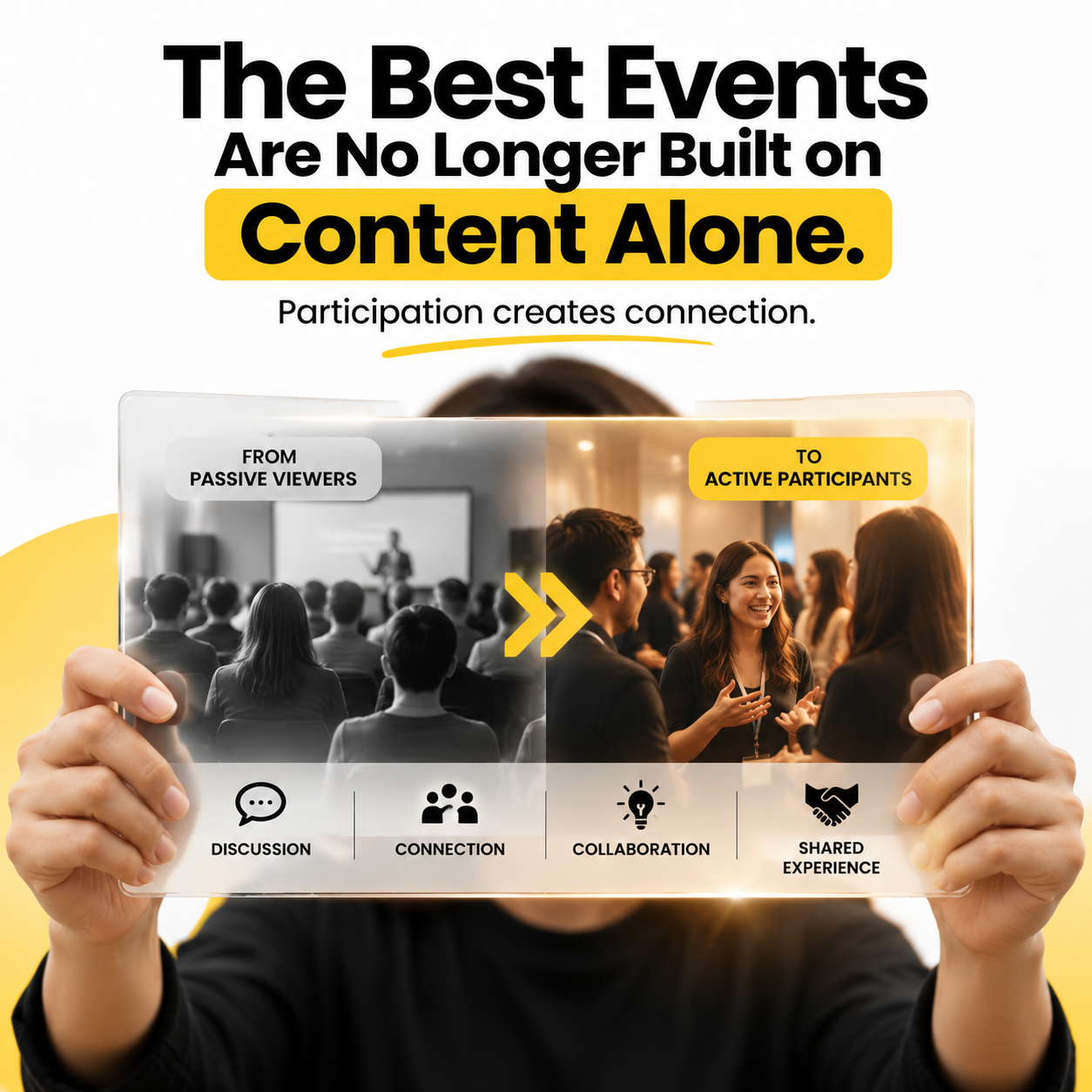
For a long time, events were built around content. Agendas were packed, speakers were prioritised, and information was treated as the main value being delivered. That model is starting to feel outdated — not because content stopped mattering, but because something else now matters more.
Why participation matters more than content
Information is no longer scarce. People can access insights, talks, videos, reports, and expert opinions anytime they like. What they cannot access on demand is the experience of being involved: contributing ideas, connecting with others, and becoming part of something live. That is where real event value now sits.
Think about the events you remember most clearly. They are rarely the ones with the densest agenda. They are the ones where you felt like an active participant — where you joined a debate, worked through a problem with strangers who became contacts, or shared a perspective and saw it land. Attendees at those events are not just listening to speakers; they are joining conversations, building relationships, and taking part in moments that matter.
Participation changes everything about how an event feels. It shifts the energy of the room, strengthens attendee engagement, and makes the experience more personal and relevant for everyone involved. It also changes what happens afterwards: people who participate are far more likely to remember the event, act on what they learned, continue conversations, and stay connected to the community. Someone who spent the day contributing has a stake in what comes next; someone who spent it watching does not.
This is why organisers should be asking a different question. Not "how do we deliver more content?" but "how do we create more participation?" That question leads to stronger event design, better audience engagement, and more meaningful outcomes.
Four practical tips to increase participation at events
1. Design for interaction, not just delivery
Move beyond one-way presentations. Formats such as roundtables, workshops, live discussions, guided networking, and structured audience input give people a role in the session rather than a seat in front of it. Attendees who are only listening are easy to lose — to their inbox, their phone, or the hallway. Attendees who are involved stay engaged, because the session does not work without them.
2. Give people a reason to contribute
Participation does not happen automatically; it needs a clear purpose and a clear invitation. "Any questions?" at the end of a talk usually produces silence. "At your table, agree on the one challenge from this session that affects you most — we will hear one per table" produces discussion, because people know exactly what is being asked of them. Create specific moments where attendees share ideas, respond to challenges, or contribute to group decisions. The clearer their role, the stronger the engagement.
3. Break the audience mindset
The word "audience" implies passivity, and event design tends to follow the language. Think in terms of participants instead, and let that reframing shape practical decisions: room layouts that favour tables over theatre rows, agendas with built-in movement and conversation, and sessions that direct attention between people rather than only towards a stage.
4. Focus on shared experience over information
People do not attend events just to learn — they attend to connect. Prioritise the moments that bring people together: collaborative sessions, peer discussions, meaningful networking, and community-led conversations. These are the parts of the event people are most likely to remember, and the parts most likely to turn a one-day attendance into an ongoing relationship.
What people are part of, not what they hear
Content can inform, but participation creates connection, and connection is where lasting value comes from. The best events are not defined by what people hear. They are defined by what people are part of.
At SixSides, we help event teams design experiences that actively guide participation, not just attract attendance. If you want to turn passive audiences into engaged communities, get in touch and let us show you how.
Give your event a community that lasts
A branded app where members show up before day one and stay long after the close. We'll walk you through it.