Blog
Event Tech Should Solve Problems, Not Just Show Features
When an organiser starts looking for an event app or platform, the search rarely begins with the technology itself. It begins with a problem: attendee engagement is low, networking feels random, sponsors are questioning their ROI, event data is thin, or the community goes quiet the moment the event ends. The software only becomes interesting because it might solve one of those problems.
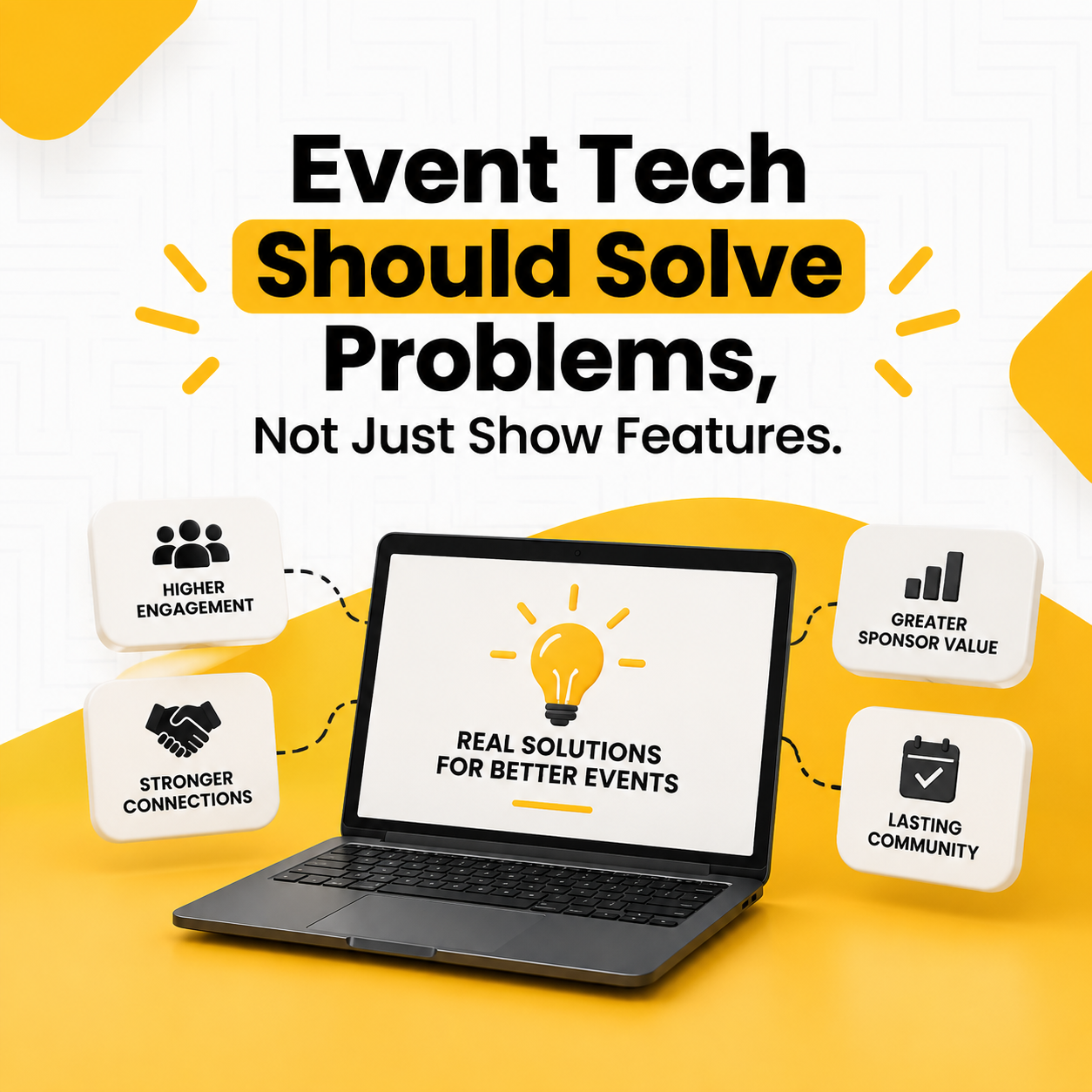
That distinction matters more than it sounds. In the event tech space, it is easy for everyone — vendors and buyers alike — to default to talking about features: agendas, attendee messaging, push notifications, analytics dashboards, networking tools. But most organisers are not looking for more tools to manage. They are looking for ways to make their events work better for the people involved: better attendee experiences, stronger connections, clearer sponsor value, and outcomes that last beyond the closing session.
The feature trap
This is where many software companies get it wrong. They position the product as the solution rather than as the support system behind a better event outcome, so every conversation drifts towards functionality instead of impact. The result is a demo full of impressive screens and an organiser still unsure whether any of it will fix the problem they came with.
The more useful approach is to flip the evaluation. Start with the outcomes you need — do attendees connect more easily? Are sponsors getting meaningful interactions? Can you measure engagement beyond clicks and downloads? Does anything keep the community alive after the event ends? — and only then ask whether the technology actually delivers them. If a platform does not improve the experience, it does not matter how long its feature list is.
Four practical tips for evaluating event technology
1. Start with the problem, not the product
Before you open a single demo, write down what you are trying to improve: attendee engagement, event networking, sponsor value, audience participation, analytics, community building. Be specific — "sponsors renewed at 40% last year and we need that higher" is a problem a platform can be measured against; "we need an event app" is not. Technology should be chosen to serve a defined outcome, never adopted for its own sake.
2. Translate features into real outcomes
Every feature should answer one question: what does this actually help create? Messaging is not just a feature — it should help attendees start better conversations with people they would not otherwise have met. Agendas are not just schedules — they should shape how people move through the event and who they encounter along the way. Analytics are not just dashboards — they should tell you whether engagement is real, which sponsors are getting value, and where the community is active. If a vendor cannot make that translation for a feature, treat it as weight rather than value.
3. Prioritise experience over complexity
More features usually mean more friction. Every extra screen, setting and notification is something an attendee has to navigate before they get to the thing they came for. Choose technology that makes participation feel natural for attendees, sponsors, speakers and organisers alike — the best event apps disappear into the experience rather than demanding attention from it.
4. Measure impact, not just usage
Downloads, page views, clicks and notification opens are easy to count, but they only prove the app was opened, not that the event worked. Focus on the signals of real value: connections made, conversations started, sponsor interactions, session engagement, post-event follow-ups and ongoing community participation. Those are the numbers that tell you whether the problem you started with is actually getting solved.
The enabler, not the outcome
Event technology is never the outcome — it is the enabler. The real question is not "what can this product do?" but "what does this help create?". The best platforms are not the ones with the most features; they are the ones that make the event meaningfully better for everyone involved.
At SixSides, we help event teams design experiences that actively guide participation, not just attract attendance. If you want technology that solves the engagement problem rather than adding to it, get in touch and we will show you how.
Give your event a community that lasts
A branded app where members show up before day one and stay long after the close. We'll walk you through it.