Best Event Analytics Platforms Compared for 2026: How to Measure Engagement, Networking, and Event Success
For modern event organizers and conference teams, the biggest question is:
What actually happened during the event, and what value did attendees, sponsors, and stakeholders gain from it?
This is why more teams are investing in event analytics platforms that provide deeper visibility into attendee behavior, networking activity, engagement levels, and sponsor outcomes.
Traditional event metrics like registrations and check-ins only show who attended. The best analytics solutions help explain how people participated, who they connected with, and what outcomes were created.
What Are Event Analytics Platforms?
Event analytics platforms are tools that collect and analyze event data to help organizers understand attendee interactions, engagement patterns, networking success, and overall event performance.
Unlike basic event management software that focuses mainly on logistics, analytics-driven platforms provide insights across the entire event lifecycle:
- Before the event: Understand registration trends and attendee interests
- During the event: Measure participation, networking, and engagement
- After the event: Analyze outcomes, relationships, and future opportunities
Why Event Analytics Matter for Conference Teams
Successful events are built around meaningful experiences.
With the right analytics, organizers can answer important questions:
- Which sessions created the most engagement?
- Who were attendees connecting with?
- Did networking goals get achieved?
- Which sponsors generated the most interactions?
- How can future events improve?
These insights allow teams to move from simply hosting events to continuously improving attendee experiences.
Key Features to Compare in Event Analytics Platforms
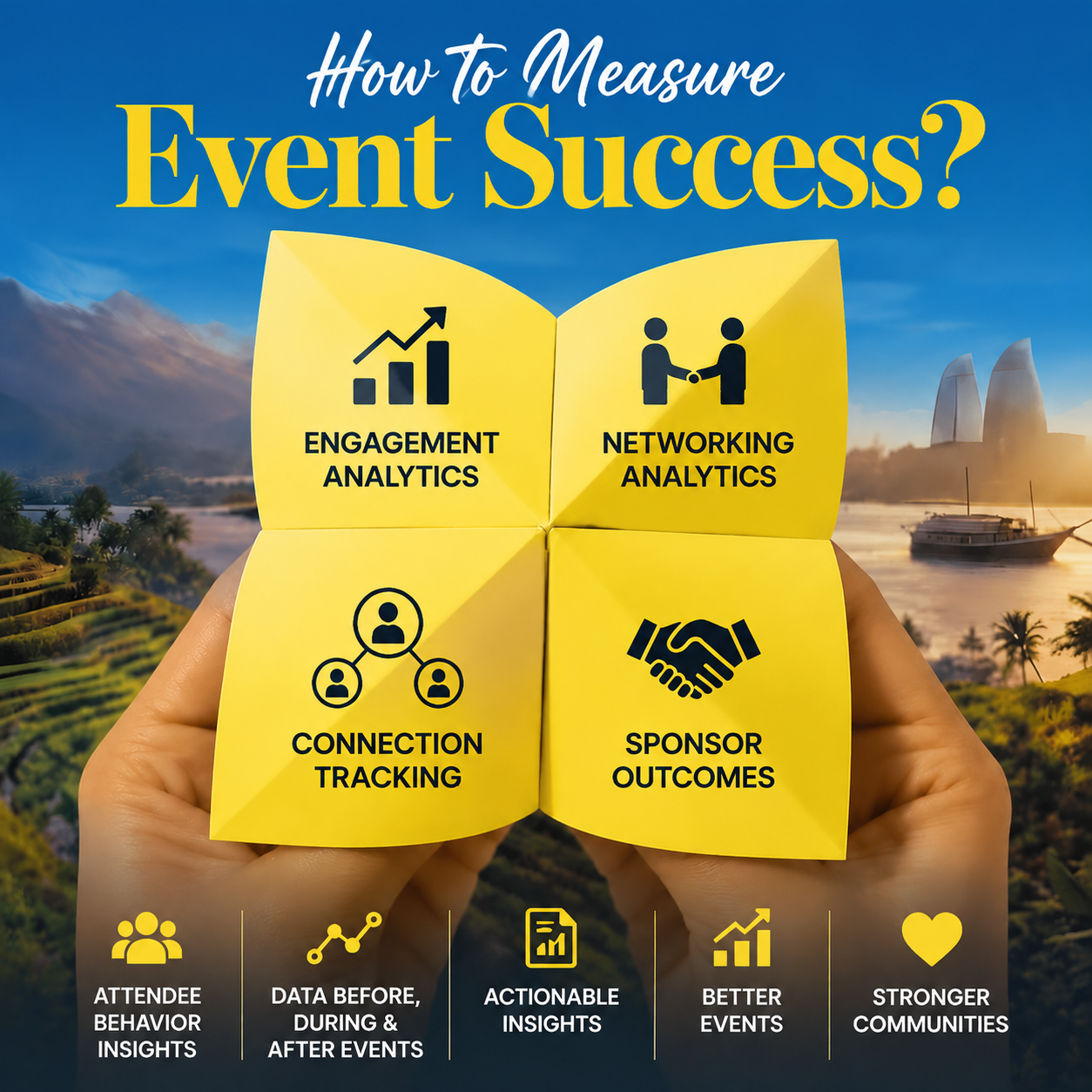
1. Attendee Engagement Analytics
Strong attendee engagement analytics help organizers understand how participants interact throughout the event.
- Look for platforms that measure:
- Session attendance and participation
- Content interactions
- Community activity
- Poll responses and feedback
- Attendee participation trends
Engagement data helps identify what creates value for attendees and what needs improvement.
2. Event Networking Analytics
Networking is one of the primary reasons people attend conferences.
The best event networking analytics tools provide visibility into:
- Number of connections created
- Meetings scheduled
- Conversations started
- Networking participation rates
- Relationship-building activity
Instead of assuming networking happened, organizers can measure whether meaningful connections were actually created.
3. Connection Tracking
Modern events need more than simple attendee lists.
Connection tracking allows teams to understand:
- Who connected with whom
- Which attendees were most active
- Which communities or groups formed
- How relationships developed over time
This creates a clearer picture of the event ecosystem and the value generated beyond sessions.
4. Sponsor Outcome Measurement
Sponsors increasingly expect measurable results, not just logo placement.
The right analytics platform should help track:
- Sponsor booth interactions
- Attendee engagement with sponsor content
- Networking activity involving sponsors
- Lead opportunities created
- Post-event relationship outcomes
Better sponsor insights lead to stronger partnerships and improved event ROI.
5. Attendee Behavior Insights
Understanding attendee behavior is critical for creating better future experiences.
Analytics platforms should help answer:
- What content attracts attendees?
- Which activities drive participation?
- When are attendees most engaged?
- What communities or interests are emerging?
These attendee behavior insights help organizers design events based on real data instead of assumptions.
The Future of Event Measurement in 2026
The future of events is moving beyond attendance metrics.
A successful event is not measured only by:
- Number of registrations
- Number of attendees
- Number of sessions delivered
It is measured by:
✅ Quality of attendee connections
✅ Level of engagement
✅ Sponsor value created
✅ Community growth
✅ Long-term relationships built
The best event analytics platforms help organizers understand these outcomes and create better experiences year after year.
Frequently Asked Questions
What is the best event analytics platform?
The best platform depends on your event goals. Conference teams should prioritize solutions that measure attendee engagement, networking activity, sponsor outcomes, and long-term relationship building.
How do event analytics improve attendee experiences?
Analytics help organizers understand attendee preferences, identify engagement opportunities, and create more personalized event experiences.
Why is connection tracking important for events?
Connection tracking shows whether attendees are building meaningful relationships, helping organizers measure networking success beyond attendance numbers.
Can event analytics help improve sponsor ROI?
Yes. Analytics provide measurable insights into sponsor interactions, attendee engagement, and business outcomes, making it easier to demonstrate sponsor value.
Turn Event Data Into Community Growth
Events should create value that continues long after the closing session.
By combining engagement insights, networking data, and community intelligence, organizations can build stronger relationships and create experiences that grow over time.
See how SixSides helps community organisations spend less time coordinating their community and more time growing it.