Blog
A Beginner's Guide to Nonprofit Event Communities
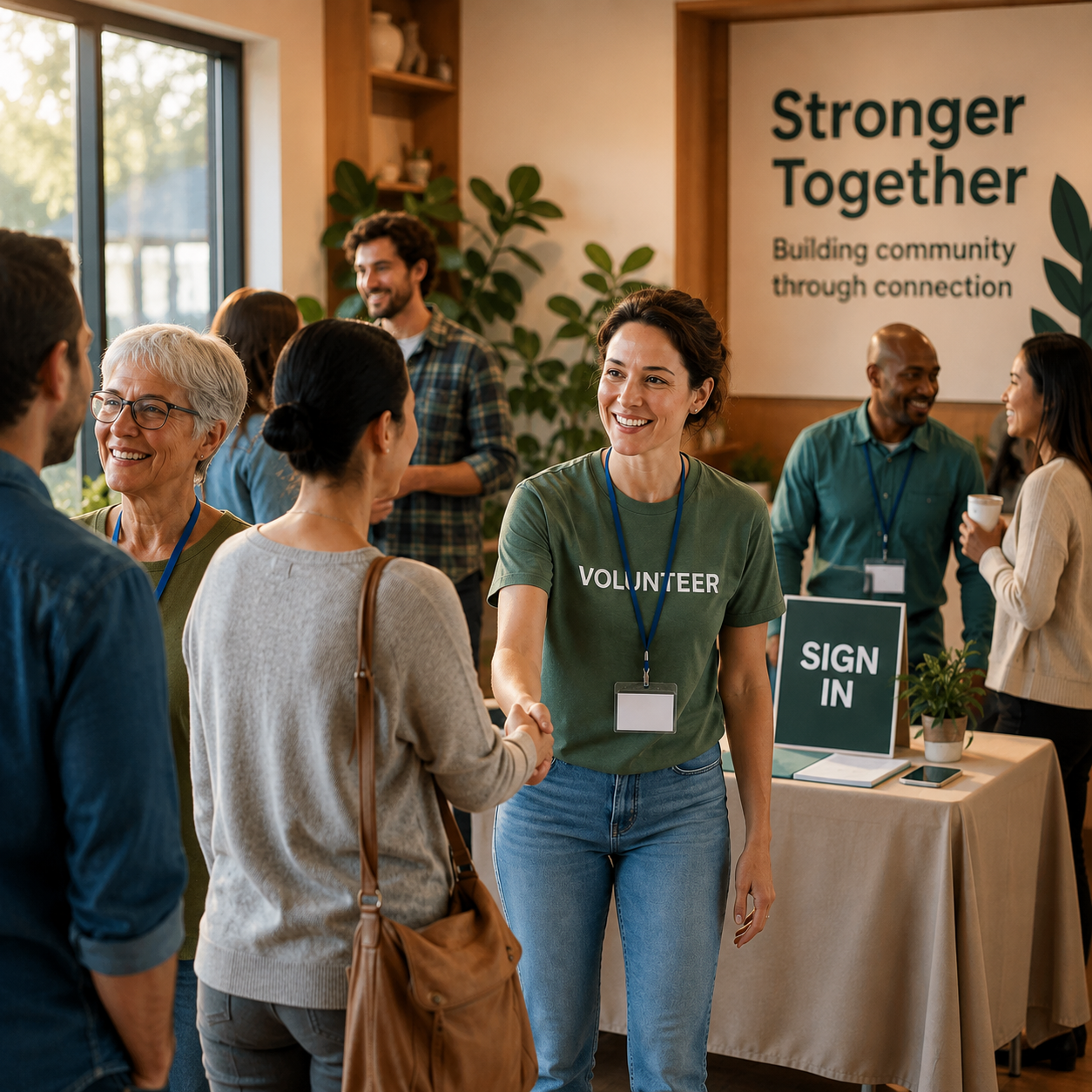
Nonprofit events can do far more than fill seats, raise funds, or deliver a programme. When structured well, they can become the foundation of stronger relationships, repeatable member engagement, and long-term community participation.
That matters because many nonprofit teams are trying to do more with less. They are balancing events, communications, outreach, administration, and volunteer coordination, often with small staff teams and limited time. In that environment, building community can feel important, but difficult to sustain.
The good news is that nonprofit community building does not have to start with a complex digital transformation or a major strategy reset. In many cases, it starts by making participation easier to discover, easier to join, and easier to continue after the event ends.
This guide explains how nonprofit event communities work, why they matter, and how to build one in a practical, manageable way.
What is a nonprofit event community?
A nonprofit event community is more than an attendee list or a calendar of activities.
It is a group of people connected by shared participation around a mission, a cause, and a series of experiences over time.
In other words, the event is not the whole story. It is the entry point. A strong event community helps people answer five simple questions:
- What is happening?
- Who is involved?
- Where do I fit
- How can I participate?
- What should I do next?
When those questions are clear, events stop being one-off moments and start becoming part of an ongoing relationship.
Why nonprofit community building matters more than ever
Most nonprofits do not struggle because people do not care. They struggle because participation is hard to coordinate.
Information often sits across:
- social media
- spreadsheets
- event tools
- volunteer rosters
- websites
- inboxes
- informal team knowledge
The result is fragmented coordination.
Supporters miss opportunities. Volunteers are harder to mobilise. Newcomers do not always know how to stay involved. Staff repeat the same information in multiple places. Momentum fades quickly after each event.
This is one of the biggest barriers to nonprofit growth. Not lack of interest, but lack of a clear participation pathway.
Strong nonprofit community building helps solve this by making it easier for people to find relevant events, understand what to expect, contribute in manageable ways, and stay connected afterwards.
The difference between running events and building community
Many organisations are good at running events.
Fewer have a repeatable system for turning events into long-term community participation.
That difference matters.
Running events focuses on:
- registrations
- attendance
- logistics
- reminders
- delivery on the day
Building community focuses on:
- member engagement
- volunteer management
- repeat participation
- belonging
- follow-up
- future contribution
- long-term nonprofit growth
An event can be well organised and still fail to build community if people leave without a clear next step.
That is why the most important conversion is not just:
RSVP to attendance
It is:
attendance to relationship to return participation to contribution
A simple framework for nonprofit event communities
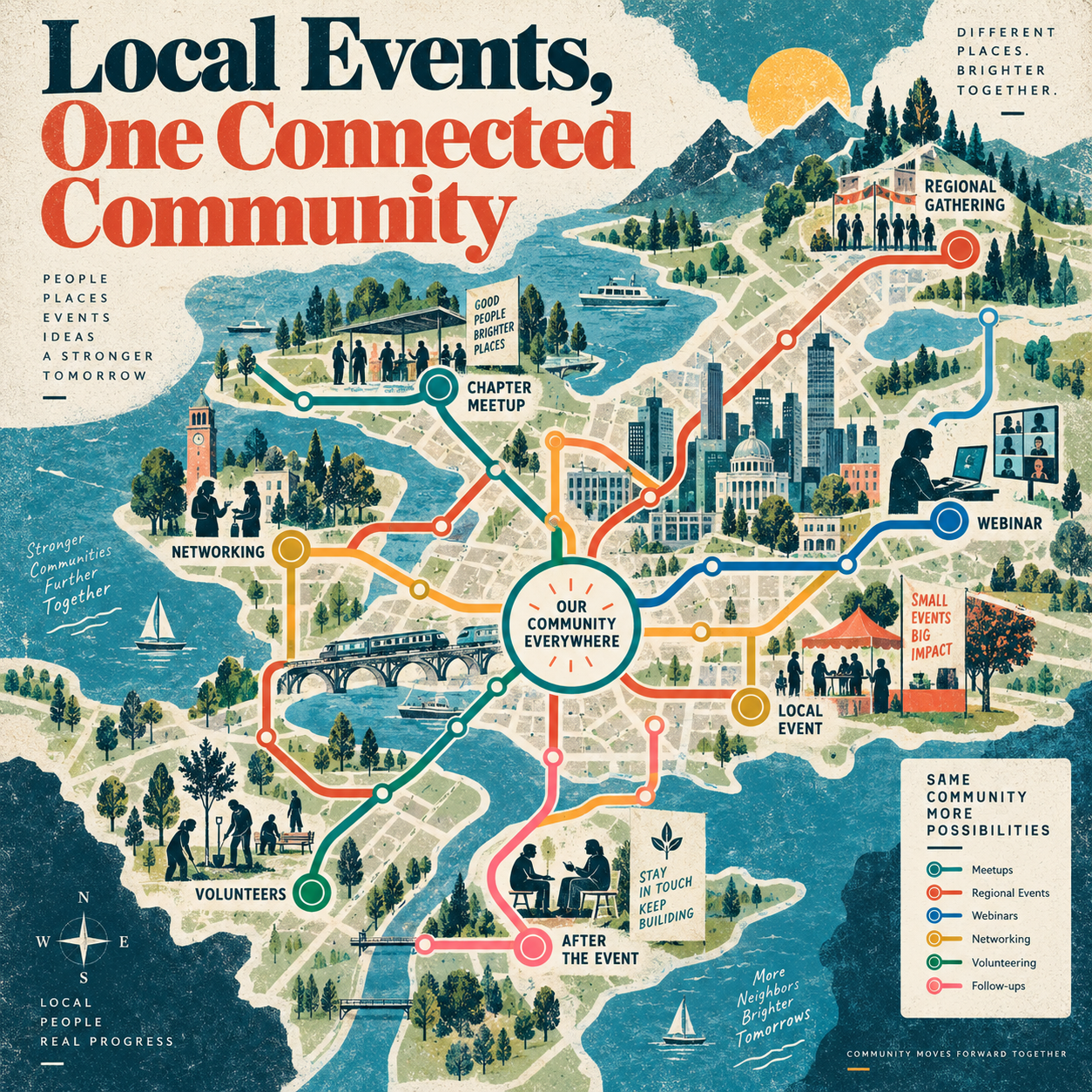
The easiest way to think about nonprofit event communities is as a participation journey.
Community participation journey
- Discover
- Attend
- Connect
- Return
- Help in a small way
- Contribute regularly
- Belong
- Lead or advocate
This is useful because most people are not ready for a major commitment at the start.
They may not want to become a board member, donor, or long-term volunteer on day one. But they may be willing to attend, help briefly, share an event, or return next month.
That is where low-lift participation becomes powerful.
What low-lift participation looks like
Low-lift participation gives people small, manageable ways to engage without asking too much too soon.
Examples include:
- welcoming guests at check-in for 30 minute
- helping set up before an event
- taking photos during the session
- sharing an event with friends or supporters
- joining a discussion group
- filling out a short feedback form
- helping with one defined task at the next event
These small actions matter because they reduce friction.
For organisations focused on community outreach, they also help people feel useful and included before they feel fully committed.
Why volunteer support is essential to growth
Volunteer management is not separate from community growth. It is one of its strongest drivers.
A healthy nonprofit event community makes volunteer participation visible and accessible before, during, and after an event.
That includes:
- clear volunteer roles
- simple sign-up pathways
- manageable time commitments
- recognition after contribution
- relevant invitations to help again
For small staff teams, this is critical. The goal is not to hold more responsibility internally. The goal is to make it easier for supporters to participate and help carry the mission forward.
When people can clearly see where they are needed, volunteer management becomes easier and more scalable.
The biggest mistake nonprofits make after events
The most common mistake is treating the event as the finish line.
It is not.
Someone may attend, enjoy the experience, meet good people, and still never return if there is no follow-up, no invitation, and no visible next step.
That is why member engagement should continue as soon as the event ends.
A practical post-event follow-up system can include:
- a thank-you message
- recognition for volunteers and contributors
- a simple feedback prompt
- a reminder of the mission connection
- one relevant invitation for what to do next
This helps organisations stop rebuilding engagement from zero after every event.
Where SixSides fits in
Many nonprofit teams do not need another complicated platform. They need a clearer way to connect events, participation, and follow-up.
That is the gap SixSides is built to address.
SixSides is designed to help community-driven organisations turn events into ongoing participation. Rather than asking teams to replace every system they already use, it helps create a clearer participation experience around what is already happening.
That means nonprofit teams can:
- make events easier to discover
- show where help is needed
- support low-lift volunteer participation
- give newcomers a clearer entry point
- follow up more consistently
- help one-off attendees become returning participants
In simple terms, SixSides helps organisations spend less time coordinating their community and more time growing it.
For nonprofits trying to improve member engagement, support community outreach, and reduce admin for small staff teams, that shift can make a meaningful difference.
How to build a nonprofit event community step by step
1. Start with visibility
If people cannot see what is happening, they cannot participate.
Make it easy for supporters, volunteers, and prospective members to find:
- upcoming events
- who the event is for
- what to expect
- where it is
- whether it is free or paid
- how to join
- how to help
- what happens next
People should not have to search across multiple channels to piece together basic event information.
A clearer destination improves community outreach and removes unnecessary friction.
2. Make participation easier than commitment
Many nonprofits ask for too much too early.
They ask people to become members, recurring volunteers, or committed supporters before they have experienced enough value to say yes confidently.
A better sequence is often:
discover, attend, connect, participate, then commit
This supports nonprofit growth because it builds trust through experience, not pressure.
3. Offer bounded volunteer roles
People are more likely to help when the request is clear and manageable.
Examples include:
- help for one hour
- support one event this month
- welcome newcomers on arrival
- assist with pack down
- take photos during the session
- moderate a discussion table
Bounded roles make volunteer management easier because expectations are defined and the barrier to entry is lower.
4. Build repeatable engagement systems
Community should not rely on one organiser remembering everything manually.
Create repeatable systems for:
- pre-event reminders
- volunteer confirmations
- event-day communication
- post-event thank-yous
- next-step invitations
- regular updates about future opportunities
These systems help small staff teams create consistency without increasing workload every time.
5. Measure participation, not just attendance
Attendance matters, but it is not enough on its own.
If you want stronger member engagement, track signals such as:
how many first-time attendees return
how many attendees volunteer next
how many volunteers help again
which events create the strongest repeat participation
which follow-up invitations lead to action
where participation starts to decline
These are more useful indicators of community health and long-term nonprofit growth than attendance numbers alone.
6. Make newcomers feel expected
First impressions shape whether people come back.
You can make the experience easier by providing:
- a simple "new here?" guide
- clear arrival instructions
- a named contact person
- a volunteer greeter
- a brief explanation of what to expect
- one easy next step after the event
For community outreach, this matters a great deal. People are more likely to participate when they feel welcomed, oriented, and included.
7. Connect each event to the bigger mission
Every event should help people understand:
why this activity matters
how it supports the broader mission
how their presence contributes
what their next step could be
This transforms the event from a standalone activity into part of a wider community journey.
A practical example
Imagine a nonprofit running monthly local events.
Without a clear participation system, the team may rely on:
- social posts to promote the event
- spreadsheets for volunteer management
- inboxes for updates
- manual follow-up after the event
The event may still run well, but the community experience remains fragmented.
A stronger approach is to create one clearer participation pathway where people can:
- discover upcoming activities
- understand what to expect
- see how to help
- volunteer for a small, defined role
- receive relevant follow-up afterwards
- find the next opportunity to participate
That is the type of experience SixSides is designed to support.
Instead of treating each event as a separate task, the organisation starts treating every event as part of an ongoing community participation journey.
How small staff teams can do this without burning out
This is the real operational question.
The answer is not to do more. It is to remove unnecessary coordination and make the right actions easier to repeat.
Start small:
- choose one recurring event
- define two or three volunteer roles
- create one post-event follow-up template
- give attendees one clear next step
- track return participation over the next 60 to 90 days
You do not need a perfect system. You need a usable one.
The goal is to help people move from attendance to involvement without increasing admin every week.
Final thoughts
The strongest nonprofit event communities are not built by adding more noise, more tools, or more one-off campaigns.
They are built by making participation easier to see, easier to join, and easier to continue.
That is what effective **nonprofit community building **looks like in practice.
For organisations focused on member engagement, volunteer management, community outreach, and sustainable nonprofit growth, the opportunity is clear:
Do not treat events as isolated transactions.
Treat them as the beginning of an ongoing participation journey.
If your team wants to strengthen participation without adding more administration, SixSides can help create a clearer path from event attendance to ongoing community involvement.
See how SixSides helps community organisations spend less time coordinating their community and more time growing it.
Give your event a community that lasts
A branded app where members show up before day one and stay long after the close. We'll walk you through it.